Blog

  • NASA Draws on Industry for Mars Telecommunications Network

    NASA Draws on Industry for Mars Telecommunications Network

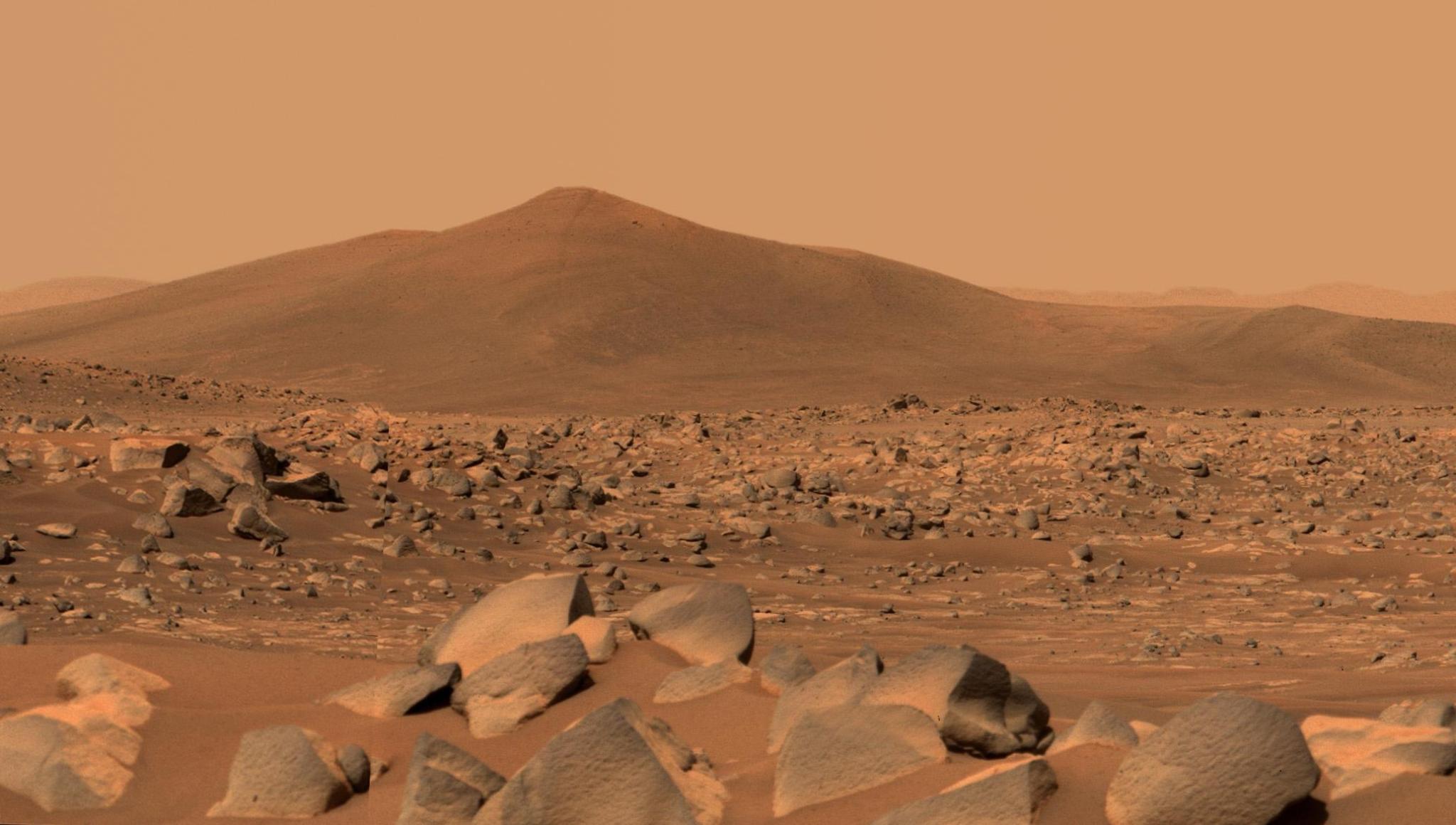
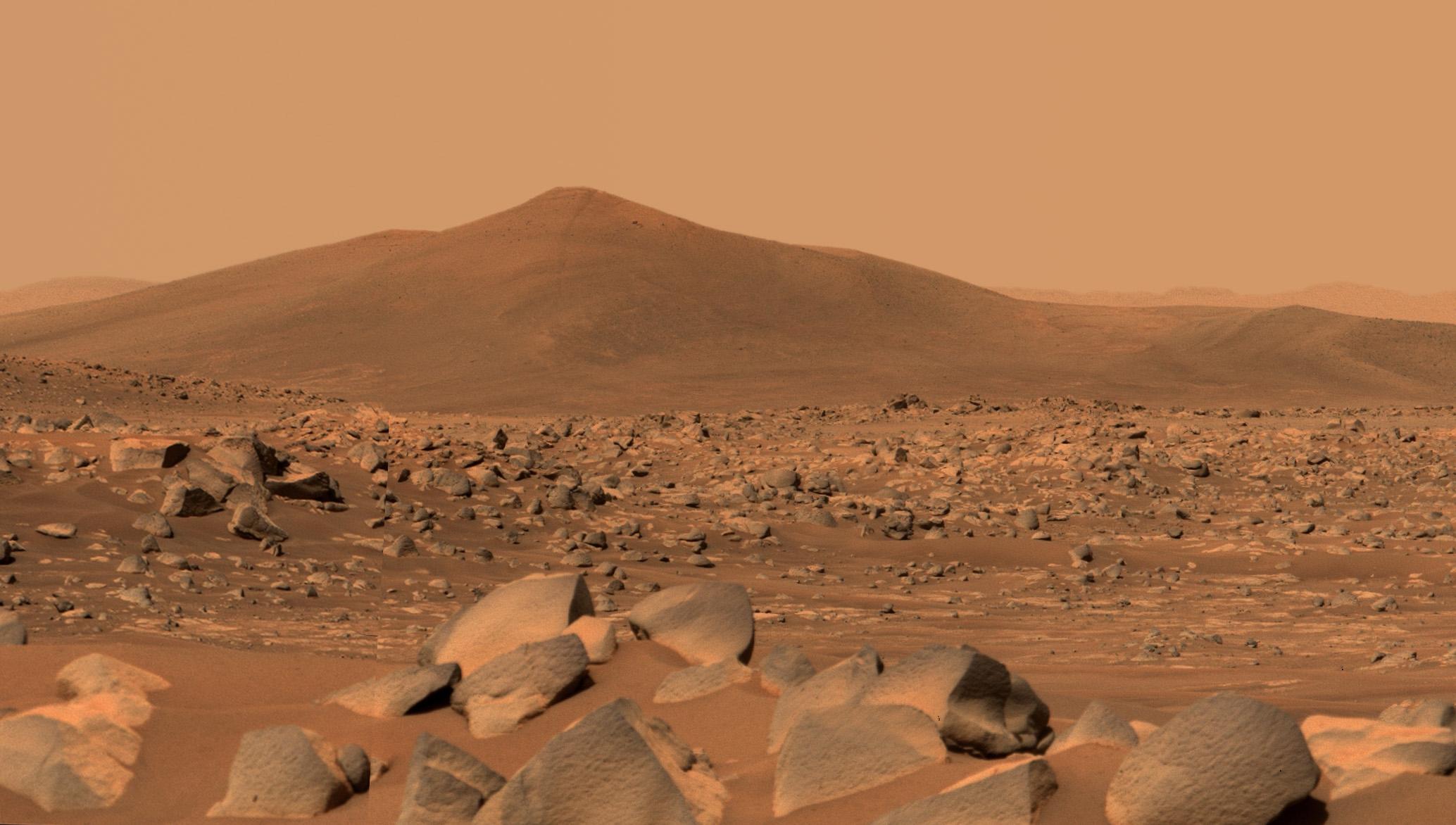
    NASA’s Perseverance Mars rover used its dual-camera Mastcam-Z imager to capture this image of “Santa Cruz,” a hill about 1.5 miles (2.5 kilometers) away from the rover, on April 29, 2021.
    Credit: NASA

    On Thursday, NASA issued a Request for Proposal (RFP), seeking industry collaboration for the Mars Telecommunications Network.

    Reliable, high bandwidth communications is necessary to relay science data, high-definition imagery, and critical information during Mars missions. The network will use high-performance Mars telecommunications orbiters at the Red Planet to support future surface, orbital, and human exploration.

    This RFP builds on a draft released April 2, as well as insights gathered during the accompanying industry day at NASA’s Goddard Space Flight Center in Greenbelt, Maryland, where commercial partners provided feedback on agency objectives for the Mars Telecommunications Network.

    The request seeks responses that address both current and future operational missions. It also seeks a science payload accommodation that will be selected by NASA’s Science Mission Directorate. Industry is asked to respond within 30 calendar days of the posting, and the network should be ready to operate at Mars no later than 2030.

    The Mars Telecommunications Network is part of NASA’s evolving space architecture, extending continuous network services beyond Earth to the Moon and Mars. The Mars Telecommunications Network is part of NASA’s SCaN (Space Communications and Navigation) Program’s Moon to Mars strategy, and is enabled by the direction and funding provided by Congress in the Working Families Tax Cut Act.

    To learn more about NASA’s deep space exploration, visit:

    https://nasa.gov/esdmd

    Go to Original Source

  • NASA Draws on Industry for Mars Telecommunications Network

    NASA Draws on Industry for Mars Telecommunications Network

    NASA’s Perseverance Mars rover used its dual-camera Mastcam-Z imager to capture this image of “Santa Cruz,” a hill about 1.5 miles (2.5 kilometers) away from the rover, on April 29, 2021.
    Credit: NASA

    On Thursday, NASA issued a Request for Proposal (RFP), seeking industry collaboration for the Mars Telecommunications Network.

    Reliable, high bandwidth communications is necessary to relay science data, high-definition imagery, and critical information during Mars missions. The network will use high-performance Mars telecommunications orbiters at the Red Planet to support future surface, orbital, and human exploration.

    This RFP builds on a draft released April 2, as well as insights gathered during the accompanying industry day at NASA’s Goddard Space Flight Center in Greenbelt, Maryland, where commercial partners provided feedback on agency objectives for the Mars Telecommunications Network.

    The request seeks responses that address both current and future operational missions. It also seeks a science payload accommodation that will be selected by NASA’s Science Mission Directorate. Industry is asked to respond within 30 calendar days of the posting, and the network should be ready to operate at Mars no later than 2030.

    The Mars Telecommunications Network is part of NASA’s evolving space architecture, extending continuous network services beyond Earth to the Moon and Mars. The Mars Telecommunications Network is part of NASA’s SCaN (Space Communications and Navigation) Program’s Moon to Mars strategy, and is enabled by the direction and funding provided by Congress in the Working Families Tax Cut Act.

    To learn more about NASA’s deep space exploration, visit:

    https://nasa.gov/esdmd

    Orijinal Kaynağa Git

  • Picturing Earth in a New Light

    Picturing Earth in a New Light

    A global map shows changes in artificial light at night from 2014 to 2022, with increases shown in yellow and orange and decreases shown in purple.
    Some parts of the planet are shown to brighten (gold) and some dim (purple) in an analysis of nearly a decade of nighttime lights data from NASA’s Black Marble product.
    NASA Earth Observatory/Michala Garrison

    Maps can show more than just where things are—they can also show how things change. New maps of artificial light reveal a planet that has been reshaping its nights through patterns of brightening and dimming.

    The maps are based on a recent analysis of NASA’s Black Marble data, which found that instead of a gradual increase in artificial light at night over the course of nearly a decade, the patterns are much more nuanced. The analysis portrays a world flickering with industrial booms and busts, construction, and blackouts, as well as more gradual shifts, such as policy-driven retrofits.

    NASA’s Black Marble product uses observations from the VIIRS (Visible Infrared Imaging Radiometer Suite) sensors on the Suomi-NPP, NOAA-20, and NOAA-21 satellites to produce records of nighttime lights at daily, monthly, and yearly time scales. The VIIRS day-night band detects nighttime light in a range of wavelengths from green to near-infrared and uses filtering techniques to observe signals such as city lights, reflected moonlight, and auroras.

    The map above shows changes in brightness across most of the inhabited world (between 60 degrees south and 70 degrees north). Yellow and gold areas are where there has been more brightening during the study period, from 2014 to 2022, and purple areas are where there has been more dimming.  

    The visualization below shows the same data for the Eastern Hemisphere. Note that this version includes some artistic touches, such as simulated sunlight and shadows, while the nighttime lights data overlaid on the globe remain grounded in the scientific analysis. The image was featured on the cover of Nature, where the study was published in April 2026.

    A data visualization shows changes in artificial light at night across the Eastern Hemisphere from 2014 to 2022, with increases shown in yellow and orange and decreases shown in purple.
    An analysis of nearly a decade of nighttime lights data (2014-2022) from NASA’s Black Marble product revealed areas of brightening (gold) and dimming (purple) shown here across the Eastern Hemisphere.
    NASA Earth Observatory/Michala Garrison

    Overall, the researchers found that global radiance increased by 34 percent during the study period, but that surge masks large areas of dimming. Such “bidirectional changes” often happen side by side. In the U.S., for example, West Coast cities grew brighter as their populations increased, while much of the East Coast showed dimming, which the team attributed to the increased use of energy-efficient LEDs and broader economic restructuring.

    The authors concluded that internationally, nighttime light surged in China and northern India along with urban development, while LEDs and energy conservation measures coincided with reduced light pollution in Paris and throughout France (a 33 percent dimming), the UK (22 percent dimming), and the Netherlands (21 percent dimming). European nights dimmed sharply in 2022 during a regional energy crisis that followed the outbreak of the Russia-Ukraine conflict.

    Large versions of the maps on this page can be downloaded below. Animations showing annual changes in nighttime lights throughout the study period are available from NASA’s Scientific Visualization Studio.

    NASA Earth Observatory images by Michala Garrison, using data from Li, T., et al. (2026). Story by Sally Younger adapted for Earth Observatory by Kathryn Hansen.

    References & Resources

    You may also be interested in:

    Stay up-to-date with the latest content from NASA as we explore the universe and discover more about our home planet.

    North America’s Greenhouse Hub

    3 min read

    The expansion of greenhouses in southern Ontario is changing the appearance of the land surface—and the night sky.

    Article

    Northern Glow Spans Iceland and Canada

    3 min read

    A vivid display of the aurora lit up skies over the Denmark Strait and eastern Canada during a minor geomagnetic…

    Article

    Shades of a Lunar Eclipse

    3 min read

    A series of nighttime satellite images revealed how moonlight reaching Earth varied throughout a total lunar eclipse.

    Article

    Orijinal Kaynağa Git

  • Hubble Sights Galaxy in Transition

    3 min read

    Hubble Sights Galaxy in Transition

    This Hubble image is of a bright lenticular galaxy (NGC 1266) seen nearly face on. Broad bright and dimmer areas of light hint at spiral structure, but there are no distinct spiral arms. Rusty-reddish-brown dust bisects the galaxy. More distant galaxies dot the black background, some even shining through the less dense regions of the bright foreground lenticular galaxy.
    This NASA Hubble Space Telescope images reveals the lenticular galaxy, NGC 1266. This enigmatic post-starburst galaxy has a bright center and a face that hints at spiral structure, yet it holds no discernable spiral arms.
    NASA, ESA, K. Alatalo (STScI); Image Processing: G. Kober (NASA/Catholic University of America)

    This NASA Hubble Space Telescope image reveals an enigmatic galaxy with a bright center and a face that hints at spiral structure, yet it holds no obvious spiral arms. Reddish-brown clumps and filaments of dust partially obscure the galaxy’s full face, while red, blue, and orange light from distant galaxies shines through its diffuse outer regions and dots the inky-black background.

    NGC 1266 is a lenticular galaxy located some 100 million light-years away in the constellation Eridanus (the Celestial River). Astronomers classify lenticulars as transitional galaxies that represent an evolutionary bridge between spirals and ellipticals. Lenticulars are “lens-shaped” and have a bright central bulge and flattened disk like spirals, but they have no spiral arms and little to no star formation like ellipticals.

    As interesting as this galaxy’s structure and lenticular classification are, those traits aren’t its most intriguing features. NGC 1266 is a rare post-starburst galaxy that is in transition between a galaxy that experienced a major burst of star formation and a quieter elliptical galaxy. Post-starburst galaxies have a young population of stars but few star-forming regions. Roughly one percent of the local galaxy population is a post-starburst galaxy.

    Astronomers think that NGC 1266 had a minor merger with another galaxy some 500 million years ago. The merger spurred the formation of new stars and increased the mass of the galaxy’s central bulge while funneling gas into its supermassive black hole. The additional matter made the black hole much more active, creating an active galactic nucleus or AGN. The black hole’s increased activity would have generated powerful winds and jets of gas along its axis of rotation. Over time, the burst of new stars and the black hole’s powerful jets would deplete the galaxy’s reservoir of star-forming gas, while the turbulence generated in these processes suppressed new stars from forming in the gas that remained.

    Observations by Hubble and other observatories reveal a strong outflow of gas from the galaxy and that the space between its stars is shocked or highly disturbed. Researchers found that any remaining stellar nurseries are in the core of the galaxy, and that very little to no star formation happens beyond that core. These observations suggest the supermassive black hole in the galaxy’s heart may be suppressing star birth by stripping or ejecting star-forming gas from the galaxy. The shockwaves from this process would create turbulence that disturbs the gas and dust between stars enough to stop any remaining matter from gravitationally condensing into infant stars.

    Post-starburst galaxies like NGC 1266 are ideal subjects for astronomers to study the complex physical processes that suppress star formation. They help us better understand the evolution of galaxies and how supermassive black holes interact with their hosts.

    Media Contact:

    Claire Andreoli
    NASA’s Goddard Space Flight CenterGreenbelt, MD
    [email protected]

    Orijinal Kaynağa Git

  • La curiosité secoue un rocher embêtant

    La curiosité secoue un rocher embêtant

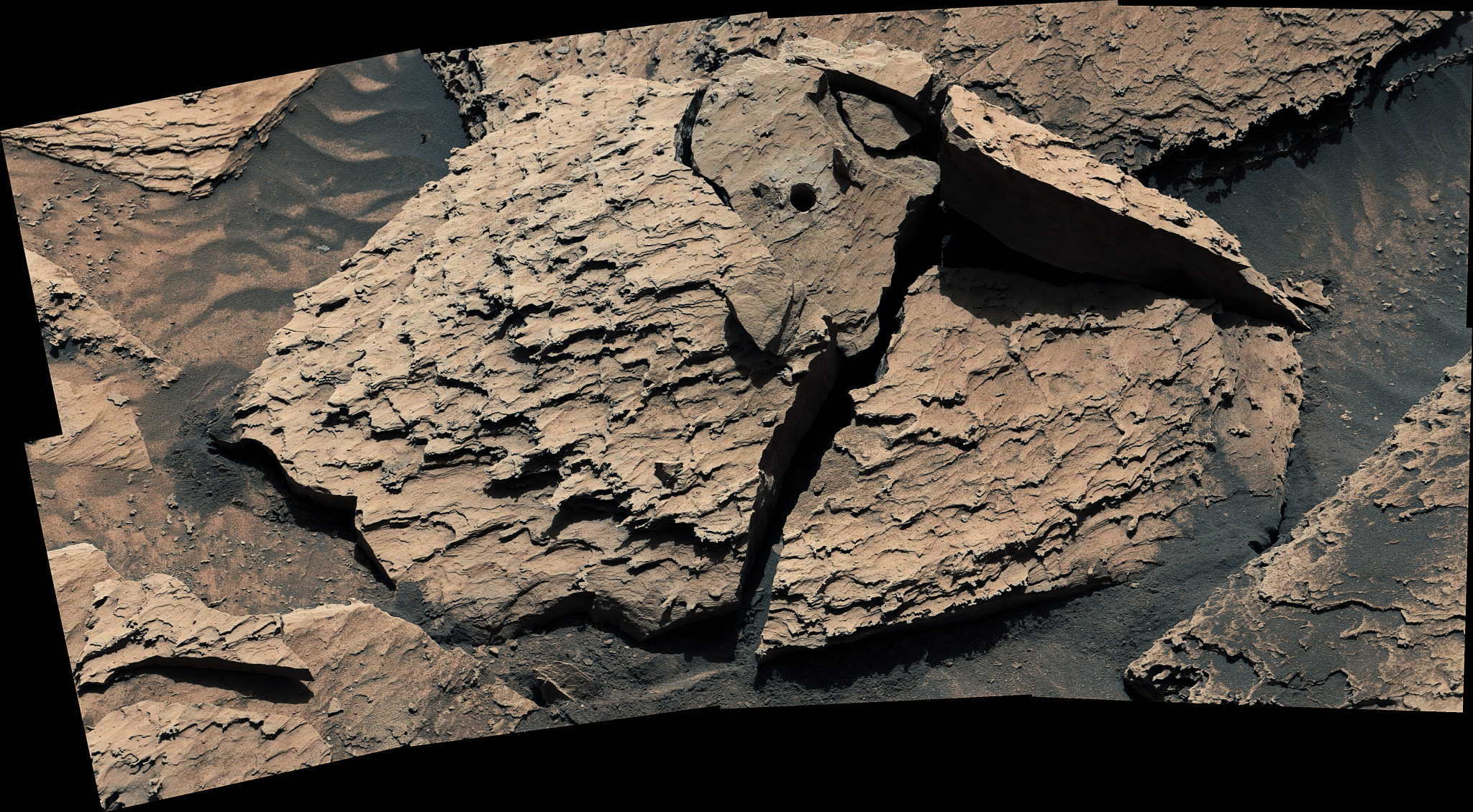
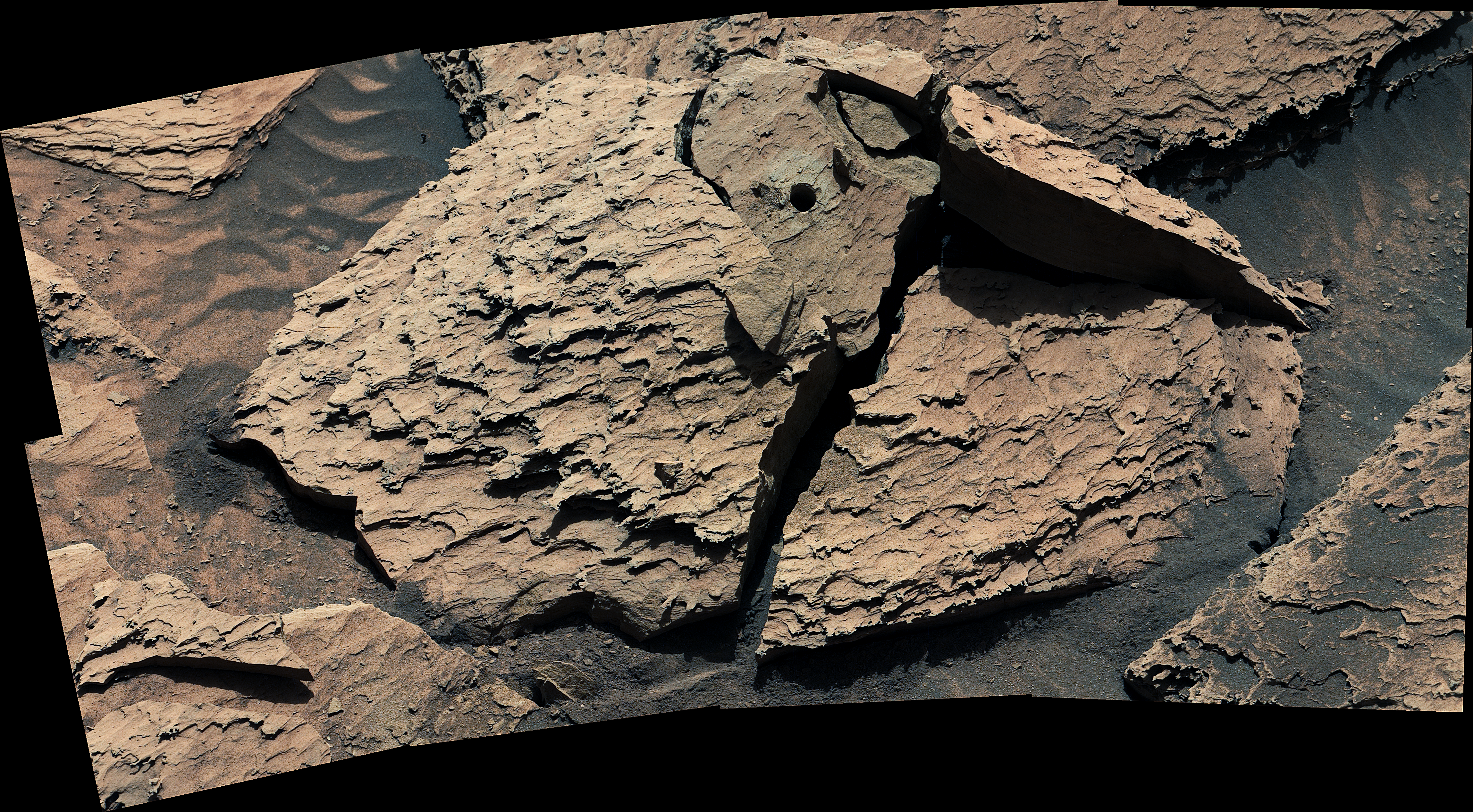
    Une grosse roche brun rougeâtre vue par le rover Curiosity Mars de la NASA. La roche est brisée en plusieurs morceaux. Un trou de forage est visible dans la pièce centrale supérieure.
    NASA/JPL-Caltech/MSSS

    Après que le rover Curiosity sur Mars de la NASA ait foré un échantillon de cette roche le 25 avril 2026, il a retiré son bras robotique et a retiré toute la roche de la surface avec lui. Les ingénieurs ont passé plusieurs jours à repositionner le bras et à faire vibrer la foreuse pour tenter de détacher la roche. Lorsqu’elle s’est finalement détachée le 1er mai, la roche s’est brisée en morceaux.

    Cette image rapprochée du rocher a été produite par la Mast Camera, ou Mastcam, de Curiosity, le 6 mai. Surnommée « Atacama », la roche est estimée à 1,5 pied de diamètre à sa base et 6 pouces d’épaisseur. Il pèserait environ 28,6 livres sur Terre (et environ un tiers de ce poids sur Mars). Le trou circulaire produit par la foreuse de Curiosity est visible dans la roche.

    Voir Atacama coincé sur la foreuse de Curiosity.

    Crédit : NASA/JPL-Caltech/MSSS

    Aller à la source originale

  • Neugier schüttelt einen lästigen Stein los

    Neugier schüttelt einen lästigen Stein los

    Ein großer, rotbrauner Felsen, gesehen vom Marsrover Curiosity der NASA. Der Felsen ist in mehrere Stücke zerbrochen. Im oberen Mittelstück ist ein Bohrloch sichtbar.
    NASA/JPL-Caltech/MSSS

    Nachdem der NASA-Marsrover Curiosity am 25. April 2026 eine Probe aus diesem Gestein gebohrt hatte, zog er seinen Roboterarm zurück und zog das gesamte Gestein mit sich von der Oberfläche. Die Ingenieure verbrachten mehrere Tage damit, den Arm neu zu positionieren und den Bohrer zu vibrieren, um zu versuchen, das Gestein zu lösen. Als es sich am 1. Mai endgültig löste, zerbrach das Gestein in Stücke.

    Diese Nahaufnahme des Felsens wurde am 6. Mai von der Mastkamera oder Mastcam von Curiosity erstellt. Der Felsen mit dem Spitznamen „Atacama“ hat an seiner Basis schätzungsweise einen Durchmesser von 1,5 Fuß und eine Dicke von 6 Zoll. Auf der Erde würde es etwa 28,6 Pfund wiegen (und etwa ein Drittel davon auf dem Mars). Das kreisförmige Loch, das Curiositys Bohrer erzeugt hat, ist im Gestein sichtbar.

    Sehen Sie, wie Atacama auf Curiositys Bohrer festsitzt.

    Quelle: NASA/JPL-Caltech/MSSS

    Zur Originalquelle gehen

  • Curiosity Shakes Loose a Pesky Rock

    Curiosity Shakes Loose a Pesky Rock

    A large, reddish-brown rock as seen by NASA's Curiosity Mars rover. The rock is broken into several pieces. A drill hole is visible in the top middle piece.
    NASA/JPL-Caltech/MSSS

    After NASA’s Curiosity Mars rover drilled a sample from this rock on April 25, 2026, it withdrew its robotic arm and pulled the entire rock off the surface with it. Engineers spent several days repositioning the arm and vibrating the drill to try and get the rock loose. When it finally detached on May 1, the rock broke into pieces.

    This close-up image of the rock was produced by Curiosity’s Mast Camera, or Mastcam, on May 6. Nicknamed “Atacama,” the rock is estimated to be 1.5 feet in diameter at its base and 6 inches thick. It would weigh roughly 28.6 pounds on Earth (and about a third of that on Mars). The circular hole produced by Curiosity’s drill is visible in the rock.

    See Atacama stuck on Curiosity’s drill.

    Credit: NASA/JPL-Caltech/MSSS

    Go to Original Source

  • Curiosity Shakes Loose a Pesky Rock

    Curiosity Shakes Loose a Pesky Rock

    A large, reddish-brown rock as seen by NASA's Curiosity Mars rover. The rock is broken into several pieces. A drill hole is visible in the top middle piece.
    NASA/JPL-Caltech/MSSS

    After NASA’s Curiosity Mars rover drilled a sample from this rock on April 25, 2026, it withdrew its robotic arm and pulled the entire rock off the surface with it. Engineers spent several days repositioning the arm and vibrating the drill to try and get the rock loose. When it finally detached on May 1, the rock broke into pieces.

    This close-up image of the rock was produced by Curiosity’s Mast Camera, or Mastcam, on May 6. Nicknamed “Atacama,” the rock is estimated to be 1.5 feet in diameter at its base and 6 inches thick. It would weigh roughly 28.6 pounds on Earth (and about a third of that on Mars). The circular hole produced by Curiosity’s drill is visible in the rock.

    See Atacama stuck on Curiosity’s drill.

    Credit: NASA/JPL-Caltech/MSSS

    Orijinal Kaynağa Git

  • NASA Science et lancement de fret pour la 34e mission de réapprovisionnement de SpaceX vers la station

    NASA Science et lancement de fret pour la 34e mission de réapprovisionnement de SpaceX vers la station

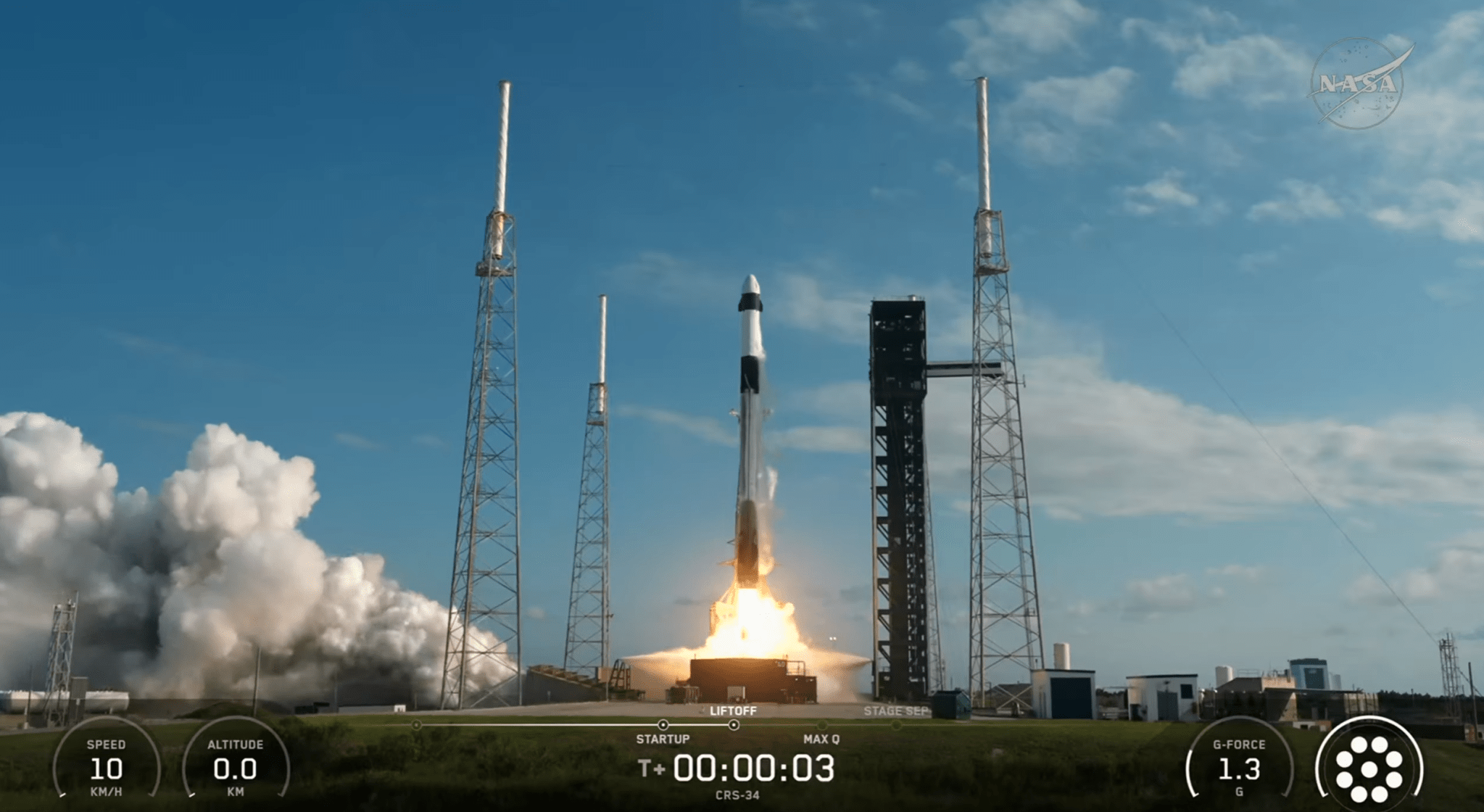
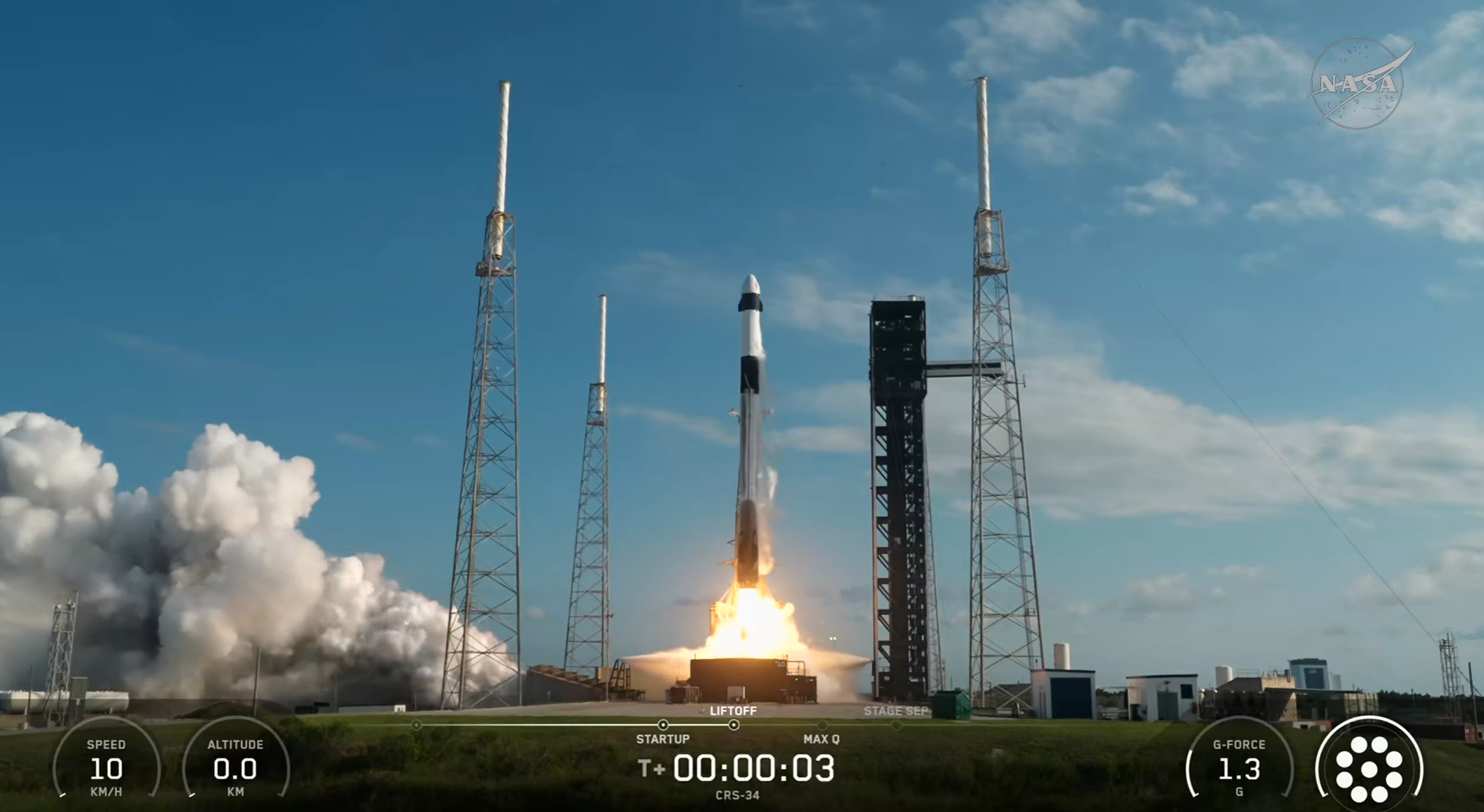
    La fusée SpaceX Falcon 9, transportant le vaisseau spatial cargo Dragon au sommet, a été lancée le vendredi 15 mai 2026 depuis le Space Launch Complex 40 à Cap Canaveral Space Station Force en Floride.
    Crédit : NASA+

    La 34ème mission commerciale de ravitaillement de SpaceX sous contrat avec la NASA se dirige vers la Station spatiale internationale avec de nouvelles expériences scientifiques après son décollage à 18h05. HAE vendredi sur une fusée Falcon 9 depuis le complexe de lancement spatial 40 de la station spatiale de Cap Canaveral en Floride.

    Le vaisseau spatial SpaceX, chargé de près de 6 500 livres de fret pour l’équipage Expedition 74 de la station spatiale, devrait s’amarrer de manière autonome vers 7 heures du matin le dimanche 17 mai, au port avant du module Harmony de la station.

    Regardez la couverture en direct des rendez-vous et de l’amarrage de la NASA à partir de 5 h 30 sur NASA+, Amazon Prime et chaîne YouTube. Découvrez comment regarder le le contenu de la NASA sur diverses plateformes en ligne, y compris les réseaux sociaux.

    En plus du fret destiné à l’équipage à bord de la station spatiale, Dragon réalisera plusieurs nouvelles expériences, notamment un projet visant à déterminer dans quelle mesure les simulateurs terrestres imitent les conditions de microgravité, un échafaudage osseux fabriqué à partir de bois qui pourrait produire de nouveaux traitements pour les affections osseuses fragiles comme l’ostéoporose, et un équipement pour aider les chercheurs à évaluer le fonctionnement des globules rouges et du la rate change dans l’espace. Le vaisseau spatial Dragon transportera également un nouvel instrument pour étudier les particules chargées autour de la Terre qui peuvent avoir un impact sur les réseaux électriques et les satellites, une enquête qui pourrait fournir une compréhension fondamentale de comment les planètes se forment, et un instrument conçu pour prendre des mesures précises de la lumière solaire réfléchie par la Terre et la Lune.

    Ces expériences ne sont qu’un échantillon des centaines d’investigations menées à bord du laboratoire en orbite dans les domaines de la biologie et de la biotechnologie, des sciences physiques et des sciences de la Terre et de l’espace. Depuis plus de 25 ans, des humains vivent et travaillent continuellement à bord de la Station spatiale internationale, faisant progresser les connaissances scientifiques et réalisant des percées en recherche impossibles sur Terre. La station spatiale aide la NASA à comprendre et à surmonter les défis des vols spatiaux habités, à élargir les opportunités commerciales en orbite terrestre basse et à bâtir les bases de missions de longue durée vers la Lune, dans le cadre du programme Artemis, et vers Mars.

    Le vaisseau spatial Dragon devrait rester à la station jusqu’à la mi-juin, date à laquelle il partira et reviendra sur Terre avec des recherches et une cargaison urgentes, avant de s’écraser au large des côtes de Californie.

    Pour en savoir plus sur la recherche, les opérations et les équipages de la Station spatiale internationale :

    https://www.nasa.gov/station

    -end-

    Jimi Russell
    Siège social, Washington
    202-358-1100
    [email protected]

    Danielle Sempsrott / Leejay Lockhart
    Kennedy Space Center, Floride
    321-867-2468
    [email protected] / [email protected]

    Sandra Jones / Joseph Zakrzewski
    Centre spatial Johnson, Houston
    281-483-5111
    [email protected] / [email protected]

    Aller à la source originale

  • NASA Science, Frachtstart der 34. SpaceX-Nachschubmission zur Station

    NASA Science, Frachtstart der 34. SpaceX-Nachschubmission zur Station

    Die SpaceX Falcon 9-Rakete mit dem Frachtraumschiff Dragon an der Spitze wurde am Freitag, dem 15. Mai 2026, vom Space Launch Complex 40 am Kap gestartet Canaveral Space Force Station in Florida.
    Quelle: NASA+

    Die 34. kommerzielle Nachschubmission von SpaceX im Auftrag der NASA ist mit neuen wissenschaftlichen Experimenten auf dem Weg zur Internationalen Raumstation, nachdem sie um 18:05 Uhr gestartet ist. EDT Freitag auf einer Falcon 9-Rakete vom Space Launch Complex 40 der Cape Canaveral Space Force Station in Florida.

    Das SpaceX-Raumschiff, beladen mit fast 6.500 Pfund Fracht für die Besatzung der Expedition 74 der Raumstation, soll am Sonntag, dem 17. Mai, gegen 7 Uhr morgens autonom am vorderen Hafen des Harmony-Moduls der Raumstation andocken.

    Sehen Sie sich die Live-Berichterstattung über Rendezvous und Docking der NASA ab 5:30 Uhr auf NASA+ an, Amazon Prime und das YouTube-Kanal. Erfahren Sie, wie Sie NASA-Inhalte über eine Vielzahl von Online-Plattformen, einschließlich sozialer Medien, ansehen können.

    Zusätzlich zur Fracht für die Besatzung an Bord der Raumstation wird Dragon mehrere neue Experimente liefern, darunter ein Projekt zur Bestimmung, wie gut erdbasierte Simulatoren Mikrogravitationsbedingungen nachahmen, ein Knochengerüst aus Holz, das neue Behandlungen für fragile Knochenerkrankungen wie Osteoporose ermöglichen könnte, und Ausrüstung, um Forschern dabei zu helfen, zu beurteilen, wie rote Blutkörperchen und die Milzveränderungen im Raum. Die Raumsonde Dragon wird außerdem ein neues Instrument mitführen, um geladene Teilchen rund um die Erde zu untersuchen, die sich auf Stromnetze und Satelliten auswirken können. Diese Untersuchung könnte zu einem grundlegenden Verständnis von wie Planeten entstehen und ein Instrument, das entwickelt wurde, um äußerst genaue Messungen des von Erde und Mond reflektierten Sonnenlichts durchzuführen.

    Diese Experimente sind nur eine Auswahl von Hunderten von Untersuchungen, die an Bord des umlaufenden Labors in den Bereichen Biologie und Biotechnologie, Naturwissenschaften sowie Erd- und Weltraumwissenschaften durchgeführt wurden. Seit mehr als 25 Jahren leben und arbeiten Menschen ununterbrochen an Bord der Internationalen Raumstation, verbessern wissenschaftliche Erkenntnisse und erzielen Forschungsdurchbrüche, die auf der Erde nicht möglich sind. Die Raumstation hilft der NASA, die Herausforderungen der bemannten Raumfahrt zu verstehen und zu meistern, die kommerziellen Möglichkeiten in der erdnahen Umlaufbahn zu erweitern und die Grundlage für Langzeitmissionen zum Mond im Rahmen des Artemis-Programms und zum Mars zu schaffen.

    Das Raumschiff Dragon soll bis Mitte Juni an der Station bleiben, dann abfliegen und mit zeitkritischer Forschung und Fracht zur Erde zurückkehren, bevor es vor der Küste Kaliforniens landet.

    Erfahren Sie mehr über die Forschung, den Betrieb und die Besatzungen der Internationalen Raumstation unter:

    https://www.nasa.gov/station

    -end-

    Jimi Russell
    Hauptsitz, Washington
    202-358-1100
    [email protected]

    Danielle Sempsrott / Leejay Lockhart
    Kennedy Space Center, Florida
    321-867-2468
    [email protected] / [email protected]

    Sandra Jones / Joseph Zakrzewski
    Johnson Space Center, Houston
    281-483-5111
    [email protected] / [email protected]

    Zur Originalquelle gehen