Blog

  • Musk contre Altman semaine 2 : OpenAI riposte et Shivon Zilis révèle que Musk a tenté de débaucher Sam Altman

    Au cours de la deuxième semaine du procès historique entre Elon Musk et OpenAI, les motivations de Musk pour intenter cette action en justice ont été examinées de près.

    La semaine dernière, Musk a pris la parole, alléguant que le PDG d’OpenAI, Sam Altman, et le président Greg Brockman l’avaient trompé en lui faisant donner 38 millions de dollars à l’entreprise. Il a affirmé qu’ils avaient promis de maintenir l’entreprise en tant qu’organisation à but non lucratif dédiée au développement de l’IA au profit de l’humanité, pour ensuite accepter des milliards de dollars d’investissement de la part de Microsoft et restructurer l’entreprise pour exploiter une filiale à but lucratif.  

    Cette semaine, Brockman a riposté avec sa version des faits, arguant que Musk avait en fait poussé OpenAI à créer une branche à but lucratif et mené une âpre bataille pour en avoir le « contrôle absolu ». OpenAI a fait valoir que Musk intentait une action en justice parce qu’il n’avait pas obtenu ce qu’il voulait et qu’il tentait maintenant de saper un concurrent de sa propre société d’IA, xAI.

    Shivon Zilis, ancien membre du conseil d’administration d’OpenAI et mère de quatre enfants de Musk, a également effectué un test, révélant que Musk avait tenté de recruter le PDG d’OpenAI, Sam Altman, pour diriger un nouveau laboratoire d’IA dans son entreprise de voitures électriques, Tesla. 

    Musk a cofondé OpenAI en 2015 avec Altman, Brockman et d’autres, mais il l’a quitté en 2018. Il demande désormais au tribunal de retirer Altman et Brockman de leurs rôles et de mettre fin au restructuration OpenAI a entrepris l’année dernière, qui a converti sa filiale à but lucratif en une société d’utilité publique. Il réclame également jusqu’à 134 milliards de dollars de dommages et intérêts d’OpenAI et de Microsoft, l’investisseur d’OpenAI. 

    L’issue du procès pourrait bouleverser la course d’OpenAI vers une introduction en bourse à une valorisation approchant les 1 000 milliards de dollars. Pendant ce temps, xAI, fondé par Musk en 2023, est désormais une division de sa société de fusées, SpaceX ; les sociétés fusionnées devraient également être introduites en bourse dès juin, à une valorisation cible de 1,75 billion de dollars.

    Lundi, Brockman est entré dans la salle d’audience en costume bleu et cravate, tenant la main de son épouse, Anna Brockman. Sur le stand, il était serein, voire même joyeux, se souvenant des débuts d’OpenAI. Mais il est devenu agité sous les questions passionnées de l’avocat d’Elon Musk, Steven Molo. Altman écoutait en silence, tandis qu’Anna Brockman était assise derrière lui, s’agitant. À l’extérieur du palais de justice, les procureurs se rassemblant contre la course à l’IA ont chanté des hymnes sous les voix des avocats donnant des conférences de presse.

    Deux jours avant le début du procès, selon Brockman, Musk lui a envoyé un message pour lui demander s’il serait intéressé à s’installer. Lorsque Brockman a suggéré que les deux parties abandonnent leurs revendications, Musk a répondu : “D’ici la fin de cette semaine, vous et Sam serez les hommes les plus détestés d’Amérique. Si vous insistez, il en sera ainsi.”

    Musc est sorti en trombe avec un tableau de Tesla

    La semaine dernière, Musk a confirmé qu’il intentait une action en justice pour sauver la mission à but non lucratif d’OpenAI consistant à développer l’IA en toute sécurité, mais il s’est dit ouvert à voir OpenAI devenir une entreprise à but lucratif plafonné avec des des investissements modérés de Microsoft

    Cette semaine, Brockman a déclaré au jury que Musk n’avait jamais vraiment été déterminé à faire d’OpenAI une organisation à but non lucratif. À l’été 2017, lorsqu’un modèle d’IA créé par OpenAI a battu les meilleurs joueurs du monde dans un jeu vidéo appelé Dota 2, Musk a organisé un rassemblement dans son « manoir hanté » près de San Francisco. La maison était éclaboussée de confettis et de tasses, se souvient Brockman, et l’actrice Amber Heard, qui était à l’époque la petite amie de Musk, servait du whisky.

    “Il est temps de passer à l’étape suivante pour OpenAI. C’est l’événement déclencheur”, a écrit Musk dans un e-mail, après avoir déclaré des semaines plus tôt que si OpenAI réalisait une réalisation publique majeure, il serait “temps de créer une entreprise à but lucratif”, a déclaré Brockman au jury.

    Au cours des six semaines suivantes, a déclaré Brockman, Musk et les autres cofondateurs ont eu d’intenses discussions sur la création d’une entité à but lucratif afin de lever suffisamment de capitaux pour construire une intelligence artificielle générale, une IA puissante qui peut rivaliser avec les humains sur la plupart des tâches cognitives. Musk voulait détenir une participation majoritaire dans l’entité et le droit de choisir la majorité des membres du conseil d’administration. Il voulait également en être le PDG, a déclaré Brockman. 

    Brockman a découvert qu’en août 2017, lui et d’autres cofondateurs se sont réunis pour définir les termes de la structure à but lucratif. Ilya Sutskever, le scientifique en chef d’OpenAI à l’époque, est arrivé avec une peinture d’une Tesla en guise de « gage de bonne volonté » en échange de la véritable Tesla que Musk leur avait donnée quelques jours plus tôt. “C’était un peu comme si [Musk] nous flattait, n’est-ce pas, qu’il voulait que nous nous sentions redevables envers lui”, a déclaré Brockman au jury.

    Lorsque Brockman et Sutskever ont proposé qu’ils aient tous des parts égales de capitaux propres, a déclaré Brockman, Musk est resté silencieux et a finalement dit : « Je refuse ». Musk s’est ensuite levé et a « pris d’assaut la table », a-t-il déclaré. “En fait, je pensais qu’il allait me frapper.” Musk a attrapé le tableau et est sorti. 

    Brockman a déclaré qu’il avait ensuite eu du mal à décider s’il devait continuer à construire OpenAI avec Musk ou s’en séparer. «Il y avait une bifurcation sur la route», a-t-il déclaré. “Acceptons-nous les conditions d’Elon ? Ou est-ce que nous rejetons les conditions, il quitte pour créer les siennes, et ensuite nous créons les nôtres ?”

    « La seule chose que nous ne pouvions pas accepter était de lui confier un contrôle unilatéral et absolu, potentiellement, sur l’AGI », a déclaré Brockman au jury.

    À quoi pensait Brockman ?

    Dans son baryton théâtral, Molo a soutenu que Brockman était motivé par la cupidité plutôt que par un engagement envers la mission à but non lucratif d’OpenAI consistant à développer une IA qui profite à l’humanité. Il a noté que même si Brockman n’a jamais investi d’argent dans l’entreprise, il détient désormais une participation d’une valeur de près de 30 milliards de dollars. 

    « Résoudre la mission a toujours été ma principale motivation », a déclaré Brockman, repoussant la description que Molo avait de lui. “Cela reste ainsi aujourd’hui.” 

    Molo a affiché le journal électronique de Brockman sur un écran dans la salle d’audience, essayant de montrer au jury ce que Brockman pensait réellement dans les coulisses. En 2017, alors qu’il négociait avec Musk les termes d’une entité à but lucratif, Brockman a écrit sur son désir de devenir milliardaire : « Financièrement, qu’est-ce qui me mènera à 1 milliard de dollars ? 

    “Pourquoi n’avez-vous pas pris les 29 milliards de dollars et ne les avez-vous pas reversés à l’organisation à but non lucratif envers laquelle vous aviez une obligation fiduciaire, pour le bien de l’humanité ?” » Molo a demandé à Brockman, élevant la voix pour dramatiser l’indignation morale face au gain personnel de Brockman. 

    Molo a ensuite consulté un article de journal que Brockman avait écrit en novembre 2017, alors qu’il se demandait s’il fallait transformer OpenAI en une entreprise à but lucratif sans Musk : “ce serait une erreur de lui voler l’organisation à but non lucratif… de se convertir en une b-corp sans lui… ce serait moralement en faillite.” Brockman et Musk avaient déjà envisagé de créer une b-corp, une entreprise à but lucratif qui poursuit une mission sociale.

    Brockman a expliqué : “Je voulais dire que cela servirait réellement la mission, mais il serait difficile de se regarder dans le miroir.”

    Molo a également tenté de saper la crédibilité de Brockman en révélant qu’il détient des participations dans plusieurs sociétés ayant des liens commerciaux avec OpenAI, notamment la société d’IA Cerebras, le fournisseur de cloud CoreWeave et la startup de fusion nucléaire Helion Energy. Altman a tenté de orienter OpenAI vers des accords avec des sociétés dans lesquelles il investit, notamment Helion et le fabricant de fusées Stoke Space, attirant ainsi un examen minutieux sur d’éventuels conflits d’intérêts.

    L’ancienne directrice de la technologie d’OpenAI, Mira Murati, et l’ancienne membre du conseil d’administration d’OpenAI, Helen Toner, sont toutes deux apparues dans des dépositions vidéo. Ils ont évoqué le bref licenciement d’Altman en 2023, affirmant qu’ils ne pouvaient pas lui faire confiance en raison de ses présumé passé de mensonge. Les messages texte de Murati avec Altman à cette époque, qui ont été présentés comme preuve, ont révélé ses tentatives désespérées pour comprendre ce qui se passait et reprendre le contrôle. 

    Musc a planifié un laboratoire d’IA rival chez Tesla

    Après les deux jours de témoignage de Brockman, Shivon Zilis, qui a quitté le conseil d’administration d’OpenAI en 2023, a pris la parole dans une veste noire et un jean noir, semblant calme mais avec une pointe de nerfs. L’avocate d’OpenAI, Sarah Eddy, lui a demandé d’une voix trompeusement apaisante si elle avait servi d’intermédiaire pour Musk alors qu’il tentait de débaucher les cofondateurs d’OpenAI pour qu’ils travaillent dans un nouveau laboratoire d’IA au sein de Tesla. Eddy a fait valoir que Musk poursuit OpenAI uniquement pour saper un concurrent dans la course à l’IA. 

    Zilis a déclaré qu’elle avait rencontré Musk alors qu’elle travaillait chez OpenAI en tant que conseillère informelle en 2016, et qu’ils avaient eu une rencontre amoureuse « ponctuelle ». En 2017, elle a rejoint Neuralink, la société d’implants cérébraux de Tesla et Musk. En 2020, elle rejoint le conseil d’administration d’OpenAI. Elle est tombée enceinte des enfants de Musk par FIV, mais n’a pas révélé ses liens avec Musk à OpenAI jusqu’à ce que Business Insider les rapporte en 2022. 

    En décembre 2017, alors que les négociations sur la création d’une entité à but lucratif étaient au point mort, Musk avait conclu qu’il était peu probable qu’OpenAI construise l’AGI et s’est tourné vers la construction d’un laboratoire d’IA chez Tesla, selon un e-mail envoyé à Zilis. 

    Eddy a extrait une ébauche d’un document FAQ que Zilis a envoyé par courrier électronique à un collègue de Tesla en 2017 à propos d’un événement que l’entreprise organisait lors de la conférence NeurIPS AI : “Le but de cet événement est de partager que Tesla est en train de construire un laboratoire d’IA de premier plan au monde (?) qui rivalisera avec Google/DeepMind et Facebook AI Research.” 

    Zilis a déclaré au jury que lorsque Musk était encore membre du conseil d’administration d’OpenAI, il avait tenté de recruter Altman pour diriger ce futur laboratoire d’IA. Musk avait demandé à Andrej Karpathy, un chercheur scientifique d’OpenAI qu’il avait recruté pour travailler chez Tesla, “d’envoyer une liste des meilleures personnes d’OpenAI à débaucher”, selon un message texte de Zilis. 

    « Il y a peu de chances qu’OpenAI devienne une force sérieuse si je me concentre sur TeslaAI », a envoyé Musk à Zilis en 2018, juste avant de quitter OpenAI. Le laboratoire d’IA de Tesla n’a jamais abouti.

    Eddy a demandé à Zilis à qui elle était fidèle lorsqu’elle travaillait pour OpenAI et Musk. “J’étais partisan du meilleur résultat de l’IA pour l’humanité”, a déclaré Zilis au jury.

    Que se passe-t-il la semaine prochaine ?

    La semaine prochaine, Ilya Sutskever et le PDG de Microsoft, Satya Nadella, témoigneront. Les avocats de Musk et d’OpenAI présenteront leurs plaidoiries finales. Le jury commencera à délibérer la semaine suivante et rendra un verdict consultatif guidant le juge pour trancher l’affaire.

    Cette histoire fait partie de la couverture continue du MIT Technology Review sur le procès Musk c. Altman. Suivez @techreview ou @michelletomkim sur X pour des rapports à la minute près.
    Aller à la source originale

  • Musk vs. Altman Woche 2: OpenAI schlägt zurück und Shivon Zilis enthüllt, dass Musk versucht hat, Sam Altman abzuwerben

    In der zweiten Woche des bahnbrechenden Prozesses zwischen Elon Musk und OpenAI wurden Musks Beweggründe für die Klageerhebung auf den Prüfstand gestellt.

    Letzte Woche bezog Musk Stellung und behauptete, OpenAI-CEO Sam Altman und Präsident Greg Brockman hätten ihn getäuscht, 38 Millionen US-Dollar an das Unternehmen zu spenden. Er behauptete, sie hätten versprochen, es als gemeinnützige Organisation weiterzuführen, die sich der Entwicklung von KI zum Wohle der Menschheit widmet, nur um später Milliarden von Dollar an Investitionen von Microsoft zu akzeptieren und das Unternehmen umzustrukturieren, um eine gewinnorientierte Tochtergesellschaft zu betreiben.  

    Diese Woche antwortete Brockman mit seiner Seite der Geschichte und argumentierte, dass Musk tatsächlich darauf gedrängt habe, dass OpenAI einen gewinnorientierten Arm aufbaue, und einen erbitterten Kampf um die „absolute Kontrolle“ darüber gekämpft habe. OpenAI hat argumentiert, dass Musk klagt, weil er seinen Willen nicht durchgesetzt hat und nun versucht, einen Konkurrenten seines eigenen KI-Unternehmens, xAI, zu untergraben.

    Shivon Zilis, ein ehemaliges Vorstandsmitglied von OpenAI und Mutter von vier Kindern von Musk, wurde ebenfalls getestet und enthüllte, dass Musk versuchte, den CEO von OpenAI, Sam Altman, für die Leitung eines neuen KI-Labors bei seinem Elektroautounternehmen Tesla zu gewinnen. 

    Musk war 2015 zusammen mit Altman, Brockman und anderen Mitbegründer von OpenAI, verließ das Unternehmen jedoch 2018. Nun fordert er das Gericht auf, Altman und Brockman aus ihren Rollen zu entfernen und die Umstrukturierung OpenAI hat im vergangenen Jahr seine gewinnorientierte Tochtergesellschaft in eine gemeinnützige Gesellschaft umgewandelt. Er fordert außerdem Schadensersatz in Höhe von bis zu 134 Milliarden US-Dollar von OpenAI und Microsoft, dem Investor von OpenAI. 

    Der Ausgang des Prozesses könnte den Wettlauf von OpenAI in Richtung eines Börsengangs mit einem Wert von nahezu 1 Billion US-Dollar auf den Kopf stellen. Mittlerweile ist xAI, das Musk 2023 gründete, nun eine Abteilung seines Raketenunternehmens SpaceX; Es wird außerdem erwartet, dass die kombinierten Unternehmen bereits im Juni an die Börse gehen, mit einer Zielbewertung von 1,75 Billionen US-Dollar.

    Am Montag betrat Brockman in blauem Anzug und Krawatte den Gerichtssaal und hielt Händchen mit seiner Frau Anna Brockman. Im Zeugenstand war er gelassen, sogar munter, als er sich an die Anfänge von OpenAI erinnerte. Doch die leidenschaftlichen Fragen von Elon Musks Anwalt Steven Molo brachten ihn in Aufregung. Altman hörte schweigend zu, während Anna Brockman unruhig hinter ihm saß. Vor dem Gerichtsgebäude sangen Staatsanwälte, die gegen den KI-Wettbewerb demonstrierten, Hymnen zu den Stimmen von Anwälten, die Pressekonferenzen gaben.

    Zwei Tage vor Beginn des Prozesses, so Brockman, habe ihm Musk eine Nachricht geschickt, ob er daran interessiert sei, sich niederzulassen. Als Brockman beiden Seiten vorschlug, ihre Ansprüche zurückzuziehen, schrieb Musk zurück: „Am Ende dieser Woche werden Sie und Sam die am meisten gehassten Männer in Amerika sein. Wenn Sie darauf bestehen, wird es so sein.“

    Musk stürmte mit einem Tesla-Gemälde heraus

    Letzte Woche testete Musk, dass er klagt, um die gemeinnützige Mission von OpenAI zur sicheren Entwicklung von KI zu retten, aber er sagte, er sei offen dafür, dass OpenAI ein Unternehmen mit begrenztem Gewinn und moderaten Investitionen von Microsoft wird. 

    Diese Woche sagte Brockman der Jury, dass Musk sich nie wirklich dafür eingesetzt habe, OpenAI gemeinnützig zu halten. Im Sommer 2017, als ein von OpenAI entwickeltes KI-Modell die weltbesten Spieler in einem Videospiel namens Dota 2, Musk veranstaltete ein Treffen in seinem „Haunted Mansion“ in der Nähe von San Francisco. Das Haus war mit Konfetti und Tassen bespritzt, erinnerte sich Brockman, und die Schauspielerin Amber Heard, die damals Musks Freundin war, servierte Whiskey.

    „Es ist an der Zeit, den nächsten Schritt für OpenAI zu machen. Dies ist das auslösende Ereignis“, schrieb Musk in einer E-Mail – nachdem er Wochen zuvor gesagt hatte, dass es „an der Zeit wäre, ein gewinnorientiertes Unternehmen zu gründen“, wenn OpenAI einen großen öffentlichen Erfolg erzielen würde, sagte Brockman der Jury.

    In den nächsten sechs Wochen, sagte Brockman, diskutierten Musk und die anderen Mitbegründer intensiv über die Gründung einer gewinnorientierten Organisation, um genügend Kapital für den Aufbau künstlicher allgemeiner Intelligenz aufzubringen – einer leistungsstarken KI, die bei den meisten kognitiven Aufgaben mit Menschen konkurrieren kann. Musk wollte eine Mehrheitsbeteiligung an dem Unternehmen und das Recht, die Mehrheit der Vorstandsmitglieder zu wählen. Er wolle auch dessen CEO werden, sagte Brockman. 

    Brockman testete, dass er und andere Mitbegründer im August 2017 zusammenkamen, um die Bedingungen der gewinnorientierten Struktur auszuhandeln. Ilya Sutskever, der damalige Chefwissenschaftler von OpenAI, kam mit einem Gemälde eines Tesla als „Zeichen des guten Willens“ als Gegenleistung für den tatsächlichen Tesla, den Musk ihnen Tage zuvor gegeben hatte. „Es fühlte sich ein bisschen so an, als würde [Musk] uns einschüchtern, richtig, er wollte, dass wir uns ihm gegenüber zu Dank verpflichtet fühlen“, sagte Brockman der Jury.

    Als Brockman und Sutskever vorschlugen, dass sie alle gleiche Anteile am Eigenkapital haben sollten, sagte Brockman, schwieg Musk und sagte schließlich: „Ich lehne ab.“ Musk sei daraufhin aufgestanden und „stürmte um den Tisch herum“, sagte er. „Ich dachte tatsächlich, er würde mich schlagen.“ Musk schnappte sich das Gemälde und ging hinaus. 

    Brockman sagte, dass er danach Schwierigkeiten hatte zu entscheiden, ob er OpenAI mit Musk weiter entwickeln oder sich davon trennen sollte. „Es gab eine Weggabelung“, sagte er. „Akzeptieren wir Elons Bedingungen? Oder lehnen wir die Bedingungen ab, er gibt auf, um seine eigenen zu erstellen, und dann erstellen wir unsere eigenen?“

    „Das Einzige, was wir nicht akzeptieren konnten, war, ihm einseitige, möglicherweise absolute Kontrolle über die AGI zu übertragen“, sagte Brockman der Jury.

    Was dachte Brockman?

    In seinem theatralischen Bariton argumentierte Molo, dass Brockman eher von Gier als von einem Engagement für die gemeinnützige Mission von OpenAI motiviert sei, KI zu entwickeln, die der Menschheit zugute kommt. Er wies darauf hin, dass Brockman zwar nie Geld in das Unternehmen investiert habe, er aber mittlerweile einen Anteil im Wert von fast 30 Milliarden US-Dollar besitze. 

    „Die Lösung der Mission war schon immer meine Hauptmotivation“, sagte Brockman und wandte sich damit gegen Molos Charakterisierung von ihm. „Das ist bis heute so geblieben.“ 

    Molo rief Brockmans elektronisches Tagebuch auf einem Bildschirm im Gerichtssaal auf und versuchte der Jury zu zeigen, was Brockman hinter den Kulissen wirklich dachte. Als Brockman 2017 mit Musk über die Bedingungen eines gewinnorientierten Unternehmens verhandelte, schrieb er über seinen Wunsch, Milliardär zu werden: „Was bringt mich finanziell auf 1 Milliarde Dollar?“ 

    „Warum haben Sie die 29 Milliarden US-Dollar nicht genommen und sie zum Wohle der Menschheit an die gemeinnützige Organisation gespendet, der Sie gegenüber treuhänderisch verpflichtet waren?“ fragte Molo Brockman und erhob seine Stimme, um die moralische Empörung über Brockmans persönlichen Gewinn zu dramatisieren. 

    Molo rief dann einen Tagebucheintrag hervor, den Brockman im November 2017 geschrieben hatte, während er sich unschlüssig war, ob er OpenAI ohne Musk in eine gemeinnützige Organisation umwandeln sollte: „Es wäre falsch, ihm die gemeinnützige Organisation zu stehlen. Ohne ihn in ein B-Corp umzuwandeln. Das wäre moralisch ziemlich bankrott.“ Brockman und Musk hatten zuvor darüber nachgedacht, ein B-Corp zu gründen, ein gewinnorientiertes Unternehmen, das eine soziale Mission verfolgt.

    Brockman erklärte: „Ich meinte, es würde tatsächlich der Mission dienen, aber es wäre schwierig, sich selbst im Spiegel zu betrachten.“

    Molo versuchte auch, Brockmans Glaubwürdigkeit zu untergraben, indem er enthüllte, dass er Anteile an mehreren Unternehmen mit Geschäftsbeziehungen zu OpenAI hält, darunter das KI-Unternehmen Cerebras, der Cloud-Anbieter CoreWeave und das Kernfusions-Startup Helion Energy. Altman hat versucht, OpenAI zu Deals zu bewegen mit Unternehmen, in die er investiert, darunter Helion und der Raketenhersteller Stoke Space, und zog dabei eine genaue Prüfung auf potenzielle Interessenkonflikte auf sich.

    Die ehemalige Chief Technology Officer von OpenAI, Mira Murati, und das ehemalige Vorstandsmitglied von OpenAI, Helen Toner, traten beide in Videoaussagen auf. Sie gingen auf die kurze Entlassung von Altman im Jahr 2023 ein und sagten, dass sie ihm aufgrund seiner angeblichen Lügengeschichte nicht vertrauen könnten. Muratis Textnachrichten mit Altman aus dieser Zeit, die als Beweismittel eingeführt wurden, offenbarten seine verzweifelten Versuche, das Geschehen zu verstehen und die Kontrolle zurückzugewinnen. 

    Musk plante ein konkurrierendes KI-Labor bei Tesla

    Nach Brockmans zweitägiger Aussage trat Shivon Zilis, der 2023 den Vorstand von OpenAI verließ, in einer schwarzen Jacke und schwarzen Jeans in den Zeugenstand und wirkte gefasst, aber mit einem Anflug von Nervosität. Die Anwältin von OpenAI, Sarah Eddy, fragte sie mit trügerisch beruhigender Stimme, ob sie als Vermittler für Musk fungierte, als er versuchte, die Mitbegründer von OpenAI für die Arbeit in einem neuen KI-Labor bei Tesla abzuwerben. Eddy argumentierte, dass Musk OpenAI nur verklagt, um einen Konkurrenten im KI-Wettbewerb zu untergraben. 

    Zilis sagte, sie habe Musk 2016 kennengelernt, als sie als informelle Beraterin bei OpenAI arbeitete, und dass sie eine „einmalige“ romantische Begegnung gehabt hätten. Im Jahr 2017 wechselte sie zum Gehirnimplantat-Unternehmen von Tesla und Musk, Neuralink. Im Jahr 2020 trat sie dem Vorstand von OpenAI bei. Sie wurde durch IVF mit Musks Kindern schwanger, gab OpenAI ihre Verbindungen zu Musk jedoch erst bekannt, als Business Insider sie im Jahr 2022 meldete. 

    Im Dezember 2017, als die Verhandlungen über die Gründung einer gewinnorientierten Einheit ins Stocken gerieten, war Musk zu dem Schluss gekommen, dass OpenAI wahrscheinlich keine AGI aufbauen würde, und konzentrierte sich laut einer an Zilis gesendeten E-Mail auf den Aufbau eines KI-Labors bei Tesla. 

    Eddy hat den Entwurf eines FAQ-Dokuments erstellt, das Zilis 2017 per E-Mail an einen Kollegen bei Tesla über eine Veranstaltung schickte, die das Unternehmen auf der NeurIPS AI-Konferenz organisierte: „Der Zweck dieser Veranstaltung besteht darin, mitzuteilen, dass Tesla ein weltweit führendes KI-Labor aufbaut(?), das mit Unternehmen wie Google/DeepMind und Facebook AI Research konkurrieren wird.“ 

    Zilis sagte der Jury, dass Musk, als er noch im Vorstand von OpenAI war, versucht habe, Altman für die Leitung dieses zukünftigen KI-Labors zu gewinnen. Laut einer SMS von Zilis hatte Musk Andrej Karpathy, einen OpenAI-Forschungswissenschaftler, den er für die Arbeit bei Tesla angeworben hatte, gebeten, „eine Liste der besten OpenAI-Leute zum Abwerben zu senden“. 

    „Es besteht kaum eine Chance, dass OpenAI eine ernsthafte Kraft wird, wenn ich mich auf TeslaAI konzentriere“, schrieb Musk 2018 eine SMS an Zilis, kurz bevor er OpenAI verließ. Teslas KI-Labor wurde nie verwirklicht.

    Eddy fragte Zilis, wem sie treu war, als sie sowohl für OpenAI als auch für Musk arbeitete. „Ich war dem besten Ergebnis der KI für die Menschheit verpflichtet“, sagte Zilis der Jury.

    Was ist nächste Woche los?

    Nächste Woche werden Ilya Sutskever und Microsoft-CEO Satya Nadella aussagen. Die Anwälte von Musk und OpenAI werden ihre Schlussplädoyers halten. Die Jury wird in der darauffolgenden Woche mit der Beratung beginnen und ein beratendes Urteil fällen, das den Richter bei der Entscheidung über den Fall anleitet.

    Diese Geschichte ist Teil der laufenden Berichterstattung von MIT Technology Review über den Prozess Musk gegen Altman. Folgen Sie @techreview oder @michelletomkim auf X für aktuelle Berichte.

    Zur Originalquelle gehen

  • Musk v. Altman week 2: OpenAI fires back, and Shivon Zilis reveals that Musk tried to poach Sam Altman

    In the second week of the landmark trial between Elon Musk and OpenAI, Musk’s motivations for bringing the suit were under scrutiny.

    Last week, Musk took the stand, alleging that OpenAI CEO Sam Altman and president Greg Brockman had deceived him into donating $38 million to the company. He claimed that they’d promised to maintain it as a nonprofit dedicated to developing AI for the benefit of humanity, only to later accept billions of dollars of investment from Microsoft and restructure the company to operate a for-profit subsidiary.  

    This week, Brockman fired back with his side of the story, arguing that Musk had actually pushed for OpenAI to create a for-profit arm and fought a bitter battle to have “absolute control” over it. OpenAI has argued that Musk is suing because he didn’t get his way and is now trying to undermine a competitor to his own AI company, xAI.

    Shivon Zilis, a former OpenAI board member and the mother of four of Musk’s children, also tested, revealing that Musk tried to recruit OpenAI CEO Sam Altman to lead a new AI lab at his electric-car company, Tesla. 

    Musk cofounded OpenAI in 2015 with Altman, Brockman, and others but left in 2018. Now, he’s asking the court to remove Altman and Brockman from their roles and to unwind the restructuring OpenAI undertook last year, which converted its for-profit subsidiary into a public benefit corporation. He is also seeking as much as $134 billion in damages from OpenAI and Microsoft, OpenAI’s investor. 

    The outcome of the trial could upend OpenAI’s race toward an IPO at a valuation approaching $1 trillion. Meanwhile, xAI, which Musk founded in 2023, is now a division of his rocket company, SpaceX; the combined companies are also expected to go public as early as June, at a target valuation of $1.75 trillion.

    On Monday, Brockman walked into the courtroom in a blue suit and tie, holding hands with his wife, Anna Brockman. On the stand, he was serene, even chipper, as he remembered OpenAI’s early days. But he grew agitated under impassioned questioning from Elon Musk’s lawyer, Steven Molo. Altman listened in silence, while Anna Brockman sat behind him, fidgeting. Outside the courthouse, prosecutors rallying against the AI race sang hymns over the voices of lawyers giving press conferences.

    Two days before the trial began, according to Brockman, Musk messaged him to ask if he would be interested in settling down. When Brockman suggested that both sides drop their claims, Musk texted back: “By the end of this week, you and Sam will be the most hated men in America. If you insist, so it will be.”

    Musk stormed out with a Tesla painting

    Last week, Musk tested that he’s suing to save OpenAI’s nonprofit mission to develop AI safely, but he said he was open to seeing OpenAI become a capped-profit company with moderate investments from Microsoft

    This week, Brockman told the jury that Musk was never truly committed to keeping OpenAI a nonprofit. In the summer of 2017, when an AI model that OpenAI built beat the world’s best players in a video game called Dota 2, Musk hosted a gathering at his “Haunted Mansion” near San Francisco. The house was splattered with confetti and cups, Brockman recalled, and the actress Amber Heard, who was Musk’s girlfriend at the time, served whiskey.

    “Time to make the next step for OpenAI. This is the triggering event,” Musk wrote in an email—having said weeks earlier that if OpenAI made a major public achievement, it would be “time to create a for-profit,” Brockman told the jury.

    Over the next six weeks, Brockman said, Musk and the other cofounders had intense discussions about creating a for-profit entity to raise enough capital to build artificial general intelligence—powerful AI that can compete with humans on most cognitive tasks. Musk wanted to have majority equity in the entity and the right to choose a majority of the board members. He also wanted to be its CEO, said Brockman. 

    Brockman tested that in August 2017, he and other cofounders gathered to hash out the terms of the for-profit structure. Ilya Sutskever, OpenAI’s chief scientist at the time, arrived bearing a painting of a Tesla as a “token of goodwill” in return for the actual Teslas Musk had given them days earlier. “It felt a little bit like [Musk] was buttering us up, right, that he wanted us to feel indebted to him,” Brockman told the jury.

    When Brockman and Sutskever proposed that they all have equal shares of equity, said Brockman, Musk fell silent and finally said, “I decline.” Musk then stood up and “stormed around the table,” he said. “I actually thought he was going to hit me.” Musk grabbed the painting and walked out. 

    Brockman said that afterwards he struggled to decide whether to continue building OpenAI with Musk or break away. “There was a fork in the road,” he said. “Do we accept Elon’s terms? Or do we reject the terms, he quits to create his own, and then we create our own?”

    “The one thing we could not accept was to hand him unilateral, absolute control, potentially, over the AGI,” Brockman told the jury.

    What was Brockman thinking?

    In his theatrical baritone, Molo argued that Brockman was motivated by greed rather than a commitment to OpenAI’s nonprofit mission to develop AI that benefits humanity. He noted that while Brockman never invested money in the company, he now owns a stake worth close to $30 billion. 

    “Solving for the mission has always been my primary motivation,” Brockman said, pushing back on Molo’s characterization of him. “It remains so today.” 

    Molo pulled up Brockman’s electronic journal on a screen in the courtroom, trying to show the jury what Brockman was really thinking behind the scenes. In 2017, while negotiating with Musk over the terms of a for-profit entity, Brockman wrote about wanting to become a billionaire: “Financially, what will take me to $1B?” 

    “Why didn’t you take the $29 billion and donate it to the nonprofit that you had a fiduciary duty to, for the good of humanity?” Molo asked Brockman, raising his voice to dramatize moral indignation at Brockman’s personal gain. 

    Molo then pulled up a journal entry Brockman had written in November 2017, while he was torn over whether to turn OpenAI into a for-profit without Musk: “it’d be wrong to steal the nonprofit from him. to convert to a b-corp without him. that’d be pretty morally bankrupt.” Brockman and Musk had previously considered creating a b-corp, which is a for-profit company that pursues a social mission.

    Brockman explained, “I meant it would actually serve the mission, but it’d be hard to look at yourself in the mirror.”

    Molo also tried to undermine Brockman’s credibility by revealing that he holds a stake in multiple companies with business ties to OpenAI, including the AI company Cerebras, the cloud provider CoreWeave, and the nuclear fusion startup Helion Energy. Altman has tried to steer OpenAI into deals with companies that he invests in, including Helion and the rocket maker Stoke Space, drawing scrutiny over potential conflicts of interest.

    Former OpenAI chief technology officer Mira Murati and former OpenAI board member Helen Toner both appeared in video depositions. They addressed the brief firing of Altman in 2023, saying that they could not trust him because of his alleged history of lying. Murati’s text messages with Altman from that time, which were introduced as evidence, revealed his desperate attempts to understand what was happening and regain control. 

    Musk plotted a rival AI lab at Tesla

    After Brockman’s two days of testimony, Shivon Zilis, who left OpenAI’s board in 2023, took the stand in a black jacket and black jeans, appearing composed but with a flicker of nerves. OpenAI’s lawyer Sarah Eddy asked her in a deceptively soothing voice whether she acted as a conduit for Musk as he tried to poach OpenAI’s cofounders to work at a new AI lab within Tesla. Eddy argued that Musk is suing OpenAI only to undermine a competitor in the AI ​​race. 

    Zilis said she met Musk while working at OpenAI as an informal advisor in 2016, and that they had a “one-off” romantic encounter. In 2017, she joined Tesla and Musk’s brain-implant company, Neuralink. In 2020, she joined OpenAI’s board of directors. She became pregnant with Musk’s children through IVF but did not disclose her ties with Musk to OpenAI until Business Insider reported them in 2022. 

    By December 2017, with negotiations over creating a for-profit entity stalled, Musk had concluded that OpenAI was unlikely to build AGI and pivoted to building an AI lab at Tesla, according to an email sent to Zilis. 

    Eddy pulled up a draft of an FAQ document that Zilis emailed a colleague at Tesla in 2017 about an event the company was organizing at the NeurIPS AI conference: “The purpose of this event is to share that Tesla is building a world leading AI lab(?) which will rival the likes of Google/DeepMind and Facebook AI Research.” 

    Zilis told the jury that when Musk was still on OpenAI’s board, he tried to recruit Altman to lead that prospective AI lab. Musk had asked Andrej Karpathy, an OpenAI research scientist he’d recruited to work at Tesla, “to send a list of top OpenAI people to poach,” according to a text message by Zilis. 

    “There is little chance of OpenAI being a serious force if I focus on TeslaAI,” Musk texted Zilis in 2018, just before he left OpenAI. Tesla’s AI lab never came to fruition.

    Eddy asked Zilis whom she was loyal to when she was working for both OpenAI and Musk. “I had an allegiance to the best outcome for AI for humanity,” Zilis told the jury.

    What’s going on next week?

    Next week, Ilya Sutskever and Microsoft CEO Satya Nadella will testify. The lawyers for both Musk and OpenAI will deliver their closing arguments. The jury will begin deliberating the week after and deliver an advisory verdict guiding the judge to decide the case.

    This story is part of MIT Technology Review‘s ongoing coverage of the Musk v. Altmantrial. Follow @techreview or @michelletomkim on X for up-to-the-minute reporting.

    Go to Original Source

  • Musk v. Altman week 2: OpenAI fires back, and Shivon Zilis reveals that Musk tried to poach Sam Altman

    In the second week of the landmark trial between Elon Musk and OpenAI, Musk’s motivations for bringing the suit were under scrutiny.

    Last week, Musk took the stand, alleging that OpenAI CEO Sam Altman and president Greg Brockman had deceived him into donating $38 million to the company. He claimed that they’d promised to maintain it as a nonprofit dedicated to developing AI for the benefit of humanity, only to later accept billions of dollars of investment from Microsoft and restructure the company to operate a for-profit subsidiary.  

    This week, Brockman fired back with his side of the story, arguing that Musk had actually pushed for OpenAI to create a for-profit arm and fought a bitter battle to have “absolute control” over it. OpenAI has argued that Musk is suing because he didn’t get his way and is now trying to undermine a competitor to his own AI company, xAI.

    Shivon Zilis, a former OpenAI board member and the mother of four of Musk’s children, also testified, revealing that Musk tried to recruit OpenAI CEO Sam Altman to lead a new AI lab at his electric-car company, Tesla. 

    Musk cofounded OpenAI in 2015 with Altman, Brockman, and others but left in 2018. Now, he’s asking the court to remove Altman and Brockman from their roles and to unwind the restructuring OpenAI undertook last year, which converted its for-profit subsidiary into a public benefit corporation. He is also seeking as much as $134 billion in damages from OpenAI and Microsoft, OpenAI’s investor. 

    The outcome of the trial could upend OpenAI’s race toward an IPO at a valuation approaching $1 trillion. Meanwhile, xAI, which Musk founded in 2023, is now a division of his rocket company, SpaceX; the combined companies are also expected to go public as early as June, at a target valuation of $1.75 trillion.

    On Monday, Brockman walked into the courtroom in a blue suit and tie, holding hands with his wife, Anna Brockman. On the stand, he was serene, even chipper, as he recalled OpenAI’s early days. But he grew agitated under impassioned questioning from Elon Musk’s lawyer, Steven Molo. Altman listened in silence, while Anna Brockman sat behind him, fidgeting. Outside the courthouse, protesters rallying against the AI race sang hymns over the voices of lawyers giving press conferences.

    Two days before trial began, according to Brockman, Musk messaged him to ask if he would be interested in settling. When Brockman suggested that both sides drop their claims, Musk texted back: “By the end of this week, you and Sam will be the most hated men in America. If you insist, so it will be.”

    Musk stormed out with a Tesla painting

    Last week, Musk testified that he’s suing to save OpenAI’s nonprofit mission to develop AI safely, but he said he was open to seeing OpenAI become a capped-profit company with moderate investments from Microsoft

    This week, Brockman told the jury that Musk was never truly committed to keeping OpenAI a nonprofit. In the summer of 2017, when an AI model that OpenAI built beat the world’s best players in a video game called Dota 2, Musk hosted a gathering at his “Haunted Mansion” near San Francisco. The house was splattered with confetti and cups, Brockman recalled, and the actress Amber Heard, who was Musk’s girlfriend at the time, served whiskey.

    “Time to make the next step for OpenAI. This is the triggering event,” Musk wrote in an email—having said weeks earlier that if OpenAI made a major public achievement, it would be “time to create a for-profit,” Brockman told the jury.

    Over the next six weeks, Brockman said, Musk and the other cofounders had intense discussions about creating a for-profit entity to raise enough capital to build artificial general intelligence—powerful AI that can compete with humans on most cognitive tasks. Musk wanted to have majority equity in the entity and the right to choose a majority of the board members. He also wanted to be its CEO, said Brockman. 

    Brockman testified that in August 2017, he and other cofounders gathered to hash out the terms of the for-profit structure. Ilya Sutskever, OpenAI’s chief scientist at the time, arrived bearing a painting of a Tesla as a “token of goodwill” in return for the actual Teslas Musk had given them days earlier. “It felt a little bit like [Musk] was buttering us up, right,that he wanted us to feel indebted to him,” Brockman told the jury.

    When Brockman and Sutskever proposed that they all have equal shares of equity, said Brockman, Musk fell silent and finally said, “I decline.” Musk then stood up and “stormed around the table,” he said. “I actually thought he was going to hit me.” Musk grabbed the painting and walked out. 

    Brockman said that afterwards he struggled to decide whether to continue building OpenAI with Musk or break away. “There was a fork in the road,” he said. “Do we accept Elon’s terms? Or do we reject the terms, he quits to create his own, and then we create our own?”

    “The one thing we could not accept was to hand him unilateral, absolute control, potentially, over the AGI,” Brockman told the jury.

    What was Brockman thinking?

    In his theatrical baritone, Molo argued that Brockman was motivated by greed rather than a commitment to OpenAI’s nonprofit mission to develop AI that benefits humanity. He noted that while Brockman never invested money in the company, he now owns a stake worth close to $30 billion. 

    “Solving for the mission has always been my primary motivation,” Brockman said, pushing back on Molo’s characterization of him. “It remains so today.” 

    Molo pulled up Brockman’s electronic journal on a screen in the courtroom, trying to show the jury what Brockman was really thinking behind the scenes. In 2017, while negotiating with Musk over the terms of a for-profit entity, Brockman wrote about wanting to become a billionaire: “Financially, what will take me to $1B?” 

    “Why didn’t you take the $29 billion and donate it to the nonprofit that you had a fiduciary duty to, for the good of humanity?” Molo asked Brockman, raising his voice to dramatize moral indignation at Brockman’s personal gain. 

    Molo then pulled up a journal entry Brockman had written in November 2017, while he was torn over whether to turn OpenAI into a for-profit without Musk: “it’d be wrong to steal the nonprofit from him. to convert to a b-corp without him. that’d be pretty morally bankrupt.” Brockman and Musk had previously considered creating a b-corp, which is a for-profit company that pursues a social mission.

    Brockman explained, “I meant it would actually serve the mission, but it’d be hard to look at yourself in the mirror.”

    Molo also tried to undermine Brockman’s credibility by revealing that he holds a stake in multiple companies with business ties to OpenAI, including the AI company Cerebras, the cloud provider CoreWeave, and the nuclear fusion startup Helion Energy. Altman has tried to steer OpenAI into deals with companies that he invests in, including Helion and the rocket maker Stoke Space, drawing scrutiny over potential conflicts of interest.

    Former OpenAI chief technology officer Mira Murati and former OpenAI board member Helen Toner both appeared in video depositions. They addressed the brief firing of Altman in 2023, saying that they could not trust him because of his alleged history of lying. Murati’s text messages with Altman from that time, which were introduced as evidence, revealed his desperate attempts to understand what was happening and regain control. 

    Musk plotted a rival AI lab at Tesla

    After Brockman’s two days of testimony, Shivon Zilis, who left OpenAI’s board in 2023, took the stand in a black jacket and black jeans, appearing composed but with a flicker of nerves. OpenAI’s lawyer Sarah Eddy asked her in a deceptively soothing voice whether she acted as a conduit for Musk as he tried to poach OpenAI’s cofounders to work at a new AI lab within Tesla. Eddy argued that Musk is suing OpenAI only to undermine a competitor in the AI race. 

    Zilis said she met Musk while working at OpenAI as an informal advisor in 2016, and that they had a “one-off” romantic encounter. In 2017, she joined Tesla and Musk’s brain-implant company, Neuralink. In 2020, she joined OpenAI’s board of directors. She became pregnant with Musk’s children through IVF but did not disclose her ties with Musk to OpenAI until Business Insider reported them in 2022. 

    By December 2017, with negotiations over creating a for-profit entity stalled, Musk had concluded that OpenAI was unlikely to build AGI and pivoted to building an AI lab at Tesla, according to an email sent to Zilis. 

    Eddy pulled up a draft of an FAQ document that Zilis emailed a colleague at Tesla in 2017 about an event the company was organizing at the NeurIPS AI conference: “The purpose of this event is to share that Tesla is building a world leading AI lab(?) which will rival the likes of Google/DeepMind and Facebook AI Research.” 

    Zilis told the jury that when Musk was still on OpenAI’s board, he tried to recruit Altman to lead that prospective AI lab. Musk had asked Andrej Karpathy, an OpenAI research scientist he’d recruited to work at Tesla, “to send a list of top OpenAI people to poach,” according to a text message by Zilis. 

    “There is little chance of OpenAI being a serious force if I focus on TeslaAI,” Musk texted Zilis in 2018, just before he left OpenAI. Tesla’s AI lab never came to fruition.

    Eddy asked Zilis whom she was loyal to when she was working for both OpenAI and Musk. “I had an allegiance to the best outcome for AI for humanity,” Zilis told the jury.

    What’s going on next week?

    Next week, Ilya Sutskever and Microsoft CEO Satya Nadella will testify. The lawyers for both Musk and OpenAI will deliver their closing arguments. The jury will begin deliberating the week after and deliver an advisory verdict guiding the judge to decide the case.

    This story is part of MIT Technology Review’s ongoing coverage of the Musk v. Altman trial. Follow @techreview or @michelletomkim on X for up-to-the-minute reporting.

    Orijinal Kaynağa Git

  • Mettre en œuvre des technologies avancées d’IA dans la finance

    Mettre en œuvre des technologies avancées d’IA dans la finance

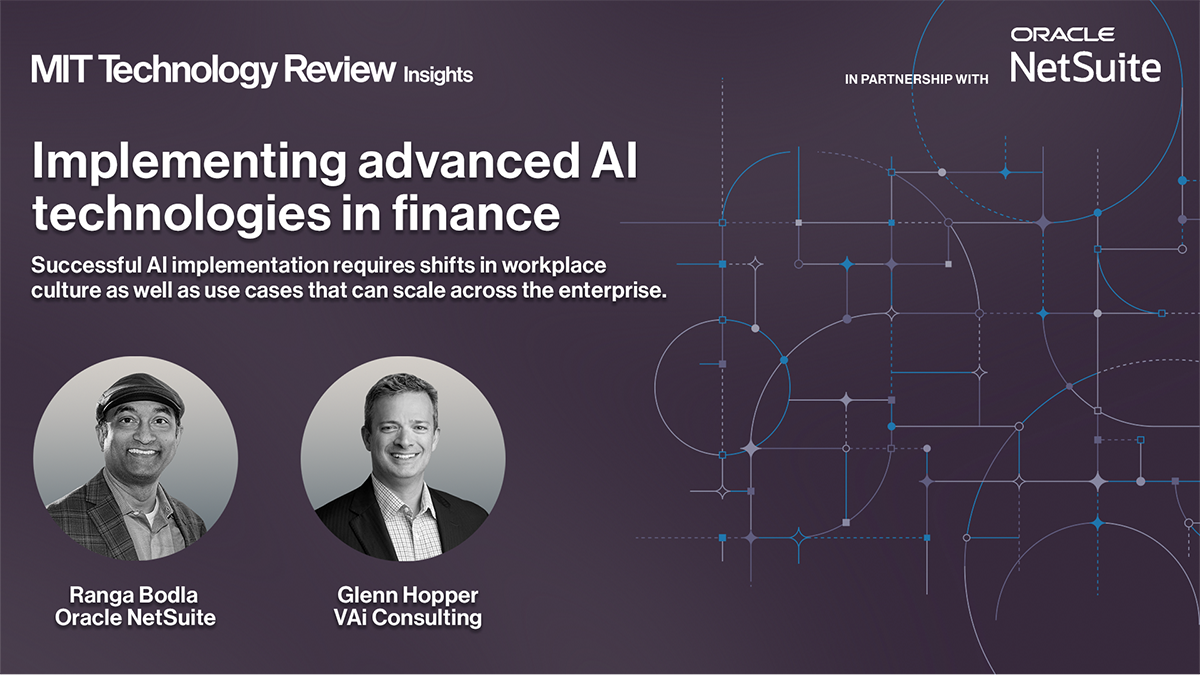
    Dans les départements financiers qui ont longtemps été définis par la précision et le contrôle, l’IA est apparue moins comme une mise à niveau soigneusement gérée que comme une insurrection silencieuse. Les employés l’utilisent déjà alors que les dirigeants se battent pour imposer après coup la structure, la gouvernance et la stratégie. Le résultat est un paradoxe : l’une des fonctions les plus étroitement réglementées de l’entreprise est désormais l’une des fonctions les plus transformées expérimentalement.

    Ce qui émerge, c’est un changement à plusieurs niveaux dans la façon dont le travail est effectué. Des commentaires sur les écarts à la détection des fraudes en passant par l’examen des contrats et la rédaction d’un récit détaillé, l’IA s’intègre dans les flux de travail, en particulier là où les données non structurées ralentissaient autrefois tout. Pourtant, comme le dit Glenn Hopper, responsable de l’IA et directeur général chez VAi Consulting, « la prolifération de l’IA s’est produite un peu avant la gouvernance et avant qu’un véritable plan ne soit mis en place ». Cette adoption ascendante oblige à un recalibrage au sommet, où les dirigeants doivent désormais concilier gains de productivité avec surveillance, risque et responsabilité.

    Il est tout aussi crucial de recadrer le rôle de l’IA. « L’IA comme moyen pour parvenir à une fin, par opposition au fait que l’IA soit la fin », déclare Ranga Bodla, vice-président du marketing industriel et sur le terrain chez Oracle NetSuite, souligne un consensus croissant : la technologie est plus efficace lorsqu’elle disparaît dans les processus existants plutôt que de les remplacer purement et simplement. Les systèmes embarqués, les intégrations transparentes et les outils tels que le protocole de contexte de modèle (MCP) accélèrent ce changement, faisant de l’IA une capacité ambiante. En particulier, c’est la facilité d’intégration, et non les économies de coûts ou les nouvelles fonctionnalités, qui est devenue le principal moteur d’adoption.

    Néanmoins, la véritable contrainte ne vient peut-être ni des données ni de la technologie, mais bien des personnes. “Le talent est la véritable cause profonde”, affirme Hopper, soulignant l’écart grandissant entre l’expertise du domaine et la maîtrise de l’IA. Même si les préoccupations concernant la sécurité des données et l’opacité des modèles persistent, le risque le plus pressant pourrait être de mal comprendre complètement les outils ou de les restreindre si étroitement que les employés recherchent des solutions de contournement échappant au contrôle de la direction. «Je pense que la possibilité d’audit est essentielle», note Bodla. 

    Pour l’avenir, la trajectoire est claire mais variable. Des agents d’IA capables d’exécuter des tâches complexes en plusieurs étapes commencent à se matérialiser, tandis que l’expansion des fenêtres contextuelles et des systèmes interopérables promettent une intelligence plus approfondie et plus persistante. Mais la véritable transformation pourrait consister en une transition progressive vers des systèmes qui renforcent le jugement, automatisent les routines et permettent aux équipes financières de passer moins de temps à réconcilier le passé et plus de temps à façonner l’avenir. 

    Cette webdiffusion est réalisée en partenariat avec Oracle NetSuite.

    Inscrivez-vous pour regarder la webdiffusion.

    Ce contenu a été produit par Insights, la branche de contenu personnalisé du MIT Technology Review. Il n’a pas été rédigé par l’équipe éditoriale du MIT Technology Review. Il a été recherché, conçu et écrit par des écrivains, éditeurs, analystes et illustrateurs humains. Cela comprend la rédaction d’enquêtes et la collecte de données pour les enquêtes. Les outils d’IA qui ont pu être utilisés étaient limités aux processus de production secondaires qui ont passé un examen humain approfondi.

    Aller à la source d’origine

  • Implementierung fortschrittlicher KI-Technologien im Finanzwesen

    Implementierung fortschrittlicher KI-Technologien im Finanzwesen

    In Finanzabteilungen, die seit langem von Präzision und Kontrolle geprägt sind, ist KI weniger als sorgfältig verwaltetes Upgrade angekommen, sondern eher als stiller Aufstand. Mitarbeiter nutzen es bereits, während die Führung im Nachhinein versucht, Struktur, Governance und Strategie durchzusetzen. Das Ergebnis ist paradox: Eine der am strengsten regulierten Funktionen im Unternehmen gehört heute zu den am experimentellsten veränderten.

    Was sich abzeichnet, ist ein vielschichtiger Wandel in der Art und Weise, wie Arbeit erledigt wird. Von Abweichungskommentaren und Betrugserkennung bis hin zu Vertragsprüfungen und der Ausarbeitung ausführlicher Beschreibungen: KI dringt in alle Arbeitsabläufe ein, insbesondere dort, wo unstrukturierte Daten einst alles verlangsamten. Doch wie Glenn Hopper, Leiter der KI-Abteilung und Geschäftsführer bei VAi Consulting, es ausdrückt: „Die Verbreitung der KI erfolgte gewissermaßen vor der Governance und bevor ein echter Plan zustande kam.“ Diese Einführung von unten nach oben erzwingt eine Neukalibrierung an der Spitze, bei der Führungskräfte nun Produktivitätssteigerungen mit Kontrolle, Risiko und Verantwortlichkeit in Einklang bringen müssen.

    Ebenso wichtig ist die Neudefinition der Rolle der KI. „KI als Mittel zum Zweck, im Gegensatz dazu, dass KI der Zweck ist“, sagt Ranga Bodla, VP of Industry and Field Marketing bei Oracle NetSuite, und unterstreicht einen wachsenden Konsens: Die Technologie ist am effektivsten, wenn sie in bestehende Prozesse verschwindet, anstatt sie vollständig zu ersetzen. Eingebettete Systeme, nahtlose Integrationen und Tools wie das Model Context Protocol (MCP) beschleunigen diesen Wandel und machen KI zu einer Umgebungsfunktion. Insbesondere die einfache Integration und nicht Kosteneinsparungen oder neue Funktionen sind zum stärksten Treiber für die Akzeptanz geworden.

    Dennoch liegt die eigentliche Einschränkung möglicherweise nicht in den Daten oder der Technologie, sondern in den Menschen. „Talent ist die eigentliche Ursache“, argumentiert Hopper und weist auf eine wachsende Kluft zwischen Domänenexpertise und KI-Kenntnissen hin. Auch wenn weiterhin Bedenken hinsichtlich der Datensicherheit und der Modellundurchsichtigkeit bestehen, besteht das dringlichere Risiko möglicherweise darin, die Tools insgesamt falsch zu verstehen oder sie so stark einzuschränken, dass Mitarbeiter nach Problemumgehungen suchen, die außerhalb der Kontrolle der Führung liegen. „Die Überprüfbarkeit ist meiner Meinung nach von entscheidender Bedeutung“, bemerkt Bodla. 

    Der Blick in die Zukunft ist klar, aber variabel. KI-Agenten, die in der Lage sind, komplexe, mehrstufige Aufgaben auszuführen, beginnen sich zu materialisieren, während erweiterte Kontextfenster und interoperable Systeme tiefere, dauerhaftere Intelligenz versprechen. Der eigentliche Wandel könnte jedoch ein allmählicher Übergang zu Systemen sein, die das Urteilsvermögen stärken, Routinen automatisieren und es den Finanzteams ermöglichen, weniger Zeit mit der Bewältigung der Vergangenheit und mehr Zeit mit der Gestaltung dessen zu verbringen, was als Nächstes kommt. 

    Dieser Webcast wird in Zusammenarbeit mit Oracle NetSuite produziert.

    Registrieren Sie sich, um den Webcast anzusehen.

    Dieser Inhalt wurde von Insights erstellt, dem Bereich für kundenspezifische Inhalte von MIT Technology Review. Es wurde nicht von der Redaktion des MIT Technology Review verfasst. Es wurde von menschlichen Autoren, Redakteuren, Analysten und Illustratoren recherchiert, entworfen und geschrieben. Dazu gehört das Verfassen von Umfragen und das Sammeln von Daten für Umfragen. Möglicherweise eingesetzte KI-Tools beschränkten sich auf sekundäre Produktionsprozesse, die einer gründlichen menschlichen Überprüfung unterzogen wurden.

    Zur Originalquelle gehen

  • Implementing advanced AI technologies in finance

    Implementing advanced AI technologies in finance

    In finance departments that have long been defined by precision and control, AI has arrived less as a neatly managed upgrade than as a quiet insurgency. Employees are already using it while leadership races to impose structure, governance, and strategy after the fact. The result is a paradox: one of the most tightly regulated functions in the enterprise is now among the most experimentally transformed.

    What’s emerging is a layered shift in how work gets done. From variance commentary and fraud detection to contract review and close narrative drafting, AI is embedding itself across workflows, particularly where unstructured data once slowed down everything. Yet, as Glenn Hopper, head of AI and managing director at VAi Consulting, puts it, “the proliferation of AI happened kind of before governance and before a real plan came about.” That bottom-up adoption is forcing a recalibration at the top, where executives must now reconcile productivity gains with oversight, risk, and accountability.

    Just as critical is reframing AI’s role. “AI as a means to an end, as opposed to AI being the end,” says Ranga Bodla, VP of industry and field marketing at Oracle NetSuite, underscores a growing consensus: the technology is most effective when it disappears into existing processes rather than outright replaces them. Embedded systems, seamless integrations, and tools like model context protocol (MCP) are accelerating this shift, making AI an ambient capability. Notably, ease of integration, not cost savings or new features, has become the strongest driver of adoption.

    Still, the real constraint may be neither data nor technology, but people. “Talent is the actual root cause,” Hopper argues, pointing to a widening gap between domain expertise and AI fluency. Even as concerns about data security and model opacity persist, the more pressing risk may be misunderstanding the tools altogether or restricting them so tightly that employees look for workarounds beyond leadership control. “The auditability of it, I think, is critical,” Bodla notes. 

    Looking ahead, the trajectory is clear but variable. AI agents capable of executing complex, multi-step tasks are beginning to materialize, while expanding context windows and interoperable systems promise deeper, more persistent intelligence. But the real transformation may be a gradual shift toward systems that bolster judgment, automate routines, and allow finance teams to spend less time reconciling the past and more time shaping what comes next. 

    This webcast is produced in partnership with Oracle NetSuite.

    Register to watch the webcast.

    This content was produced by Insights, the custom content arm of MIT Technology Review. It was not written by MIT Technology Review’s editorial staff. It was researched, designed, and written by human writers, editors, analysts, and illustrators. This includes the writing of surveys and collection of data for surveys. AI tools that may have been used were limited to secondary production processes that passed thorough human review.

    Go to Original Source

  • Implementing advanced AI technologies in finance

    Implementing advanced AI technologies in finance

    In finance departments that have long been defined by precision and control, AI has arrived less as a neatly managed upgrade than as a quiet insurgency. Employees are already using it while leadership races to impose structure, governance, and strategy after the fact. The result is a paradox: one of the most tightly regulated functions in the enterprise is now among the most experimentally transformed.

    What’s emerging is a layered shift in how work gets done. From variance commentary and fraud detection to contract review and close narrative drafting, AI is embedding itself across workflows, particularly where unstructured data once slowed down everything. Yet, as Glenn Hopper, head of AI and managing director at VAi Consulting, puts it, “the proliferation of AI happened kind of before governance and before a real plan came about.” That bottom-up adoption is forcing a recalibration at the top, where executives must now reconcile productivity gains with oversight, risk, and accountability.

    Just as critical is reframing AI’s role. “AI as a means to an end, as opposed to AI being the end,” says Ranga Bodla, VP of industry and field marketing at Oracle NetSuite, underscores a growing consensus: the technology is most effective when it disappears into existing processes rather than outright replaces them. Embedded systems, seamless integrations, and tools like model context protocol (MCP) are accelerating this shift, making AI an ambient capability. Notably, ease of integration, not cost savings or new features, has become the strongest driver of adoption.

    Still, the real constraint may be neither data nor technology, but people. “Talent is the actual root cause,” Hopper argues, pointing to a widening gap between domain expertise and AI fluency. Even as concerns about data security and model opacity persist, the more pressing risk may be misunderstanding the tools altogether or restricting them so tightly that employees look for workarounds beyond leadership control. “The auditability of it, I think, is critical,” Bodla notes. 

    Looking ahead, the trajectory is clear but variable. AI agents capable of executing complex, multi-step tasks are beginning to materialize, while expanding context windows and interoperable systems promise deeper, more persistent intelligence. But the real transformation may be a gradual shift toward systems that bolster judgement, automate routines, and allow finance teams to spend less time reconciling the past and more time shaping what comes next. 

    This webcast is produced in partnership with Oracle NetSuite.

    Register to watch the webcast.

    This content was produced by Insights, the custom content arm of MIT Technology Review. It was not written by MIT Technology Review’s editorial staff. It was researched, designed, and written by human writers, editors, analysts, and illustrators. This includes the writing of surveys and collection of data for surveys. AI tools that may have been used were limited to secondary production processes that passed thorough human review.

    Orijinal Kaynağa Git

  • Favoriser l’innovation révolutionnaire en matière d’IA grâce à l’ingénierie client

    Favoriser l’innovation révolutionnaire en matière d’IA grâce à l’ingénierie client

    Malgré des années de numérisation, les organisations captent moins d’un tiers de la valeur attendue des investissements numériques, selon une recherche McKinsey. En effet, la plupart des grandes entreprises commencent par des capacités technologiques et y ajoutent des applications, plutôt que de commencer par les besoins des clients et de revenir en arrière vers des solutions technologiques. Ne pas donner la priorité au client peut créer des solutions fragmentées ; expériences client décousues ; et finalement des transformations ratées.

    Les organisations qui obtiennent des résultats démesurés grâce à l’IA inversent le scénario. Ils adoptent un état d’esprit « d’ingénierie orientée client », plaçant les clients au cœur de la transformation technologique.

    Il s’agit d’une stratégie dans laquelle les produits et services sont développés en gardant à l’esprit l’expérience client, y compris les défis, les besoins et les attentes des clients. Les équipes de développement de produits travaillent ensuite à rebours de manière agile et agile pour trouver les étapes nécessaires à la conception et à la création de solutions permettant d’obtenir l’expérience souhaitée.

    “Lorsque vous rapprochez vos ingénieurs des clients, vous bénéficiez de beaucoup plus d’innovations latérales”, déclare Ashish Agrawal, vice-président directeur des cartes de visite et de la technologie des paiements chez Capital One. “Cela entraîne un effet multiplicateur, car les ingénieurs peuvent aborder un problème sous un angle différent qui peut être propre au point de vue des ventes ou du produit.”

    Les arguments en faveur d’une approche centrée sur le client en ingénierie

    Les ingénieurs sont par nature capables de résoudre les problèmes, explique Agrawal. Lorsqu’ils entendent parler des défis rencontrés par les clients ou de la manière dont ils utilisent les produits et services dans le monde réel, ils peuvent trouver des moyens de répondre efficacement aux besoins des clients, car ils sont naturellement plus proches des systèmes et des données que de nombreuses autres équipes de l’entreprise.

    “La promotion d’une culture centrée sur le client a un effet motivant sur les ingénieurs lorsqu’ils commencent réellement à voir comment les principaux changements qu’ils apportent, ou les fonctionnalités qu’ils ajoutent, ont un impact direct sur la vie des clients”, explique Agrawal.

    Cela demande aussi de la discipline. Agrawal explique que Capital One a fixé pour objectif à chaque ingénieur de son organisation d’établir plusieurs points de contact avec les clients tout au long de l’année sous différentes formes, notamment :

    • Séances d’empathie numérique pour observer le parcours des utilisateurs et identifier les points de friction
    • Support client intégré pendant certaines périodes afin de mieux comprendre les besoins en matière de service
    • Cours d’ingénierie, dans lesquels les ingénieurs rejoignent le personnel chargé du service client, des ventes et de l’assistance lors d’appels ou de visites sur site
    • Concours Hackathon pour élaborer des solutions autour de problèmes réels des clients

    Les opportunités d’IA centrées sur le client

    « Le plus grand défi auquel les ingénieurs des grandes entreprises sont confrontés est le manque d’accès direct aux clients », explique Agrawal. “Cela peut rendre plus difficile pour les technologues de travailler avec les clients pour identifier les problèmes et innover en solutions.”

    L’IA a accéléré les défis ainsi que les opportunités. Le cycle de vie du lancement des produits est devenu nettement plus rapide. Mais la bonne nouvelle est que les ingénieurs sont plus proches des données qui alimentent l’IA, ce qui leur permet d’appliquer plus rapidement des techniques de données basées sur l’IA pour résoudre les problèmes des clients.

    Agrawal décrit un scénario récent : dans l’espace du service client, les conversations peuvent être instantanément résumées et donner à un agent client un contexte sur la demande initiale du membre et les points d’action restants. L’IA agentique peut également être activée pour poser des questions de suivi pointues sur l’interaction qui, autrement, prendraient du temps aux agents humains pour lire l’intégralité du fil de discussion.

    “Il aurait été beaucoup plus difficile de trouver une solution dans un écosystème sans beaucoup de données de haute qualité”, explique Agrawal. “Mais lorsque vous combinez un riche écosystème de données avec des outils agents, vous passez de correctifs incrémentiels à une transformation à grande vitesse.”

    En investissant dans les données et les outils d’IA et en se concentrant sur l’expérimentation rapide, Agrawal affirme que le cycle de déploiement de solutions peut être accéléré. Les équipes apprennent que si elles répondent aux besoins des clients et itèrent beaucoup plus rapidement sur une plus large gamme de solutions, alors l’ensemble du cycle d’innovation s’accélère.

    Par exemple, Capital One a utilisé les informations sur les clients pour créer un cadre d’IA multi-agents de pointe appelé Chat Concierge afin d’améliorer l’expérience client des acheteurs et des concessionnaires de voitures. En une seule conversation, Chat Concierge peut effectuer des tâches telles que comparer des véhicules pour aider les acheteurs de voitures à décider du meilleur choix et planifier des essais routiers ou des rendez-vous avec des vendeurs.

    Agrawal explique que les acheteurs de voitures peuvent interagir avec Chat Concierge directement via les sites Web des concessionnaires participants. Les concessionnaires peuvent accéder et reprendre le chat via Navigator Platform. L’assistant IA se compose de plusieurs agents logiques qui travaillent ensemble pour imiter le raisonnement humain, lui permettant de fournir des informations et d’agir en fonction des demandes du client.


    Les éléments d’un état d’esprit axé sur l’IA

    Selon une récente enquête MIT Technology Review Insights, 70 % des dirigeants déclarent que leur entreprise utilise l’IA agentique dans une certaine mesure. Environ la moitié des dirigeants déclarent que les systèmes d’IA agentique sont hautement capables d’améliorer la détection des fraudes (56 %) et la sécurité (51 %), de réduire les coûts et d’augmenter l’efficacité (41 %) et d’améliorer l’expérience client (41 %).

    À l’avenir, il semble encore plus probable d’atteindre ces résultats. Plus de la moitié des dirigeants bancaires interrogés déclarent qu’ils s’attendent à continuer d’améliorer la détection des fraudes (75 %), la sécurité (64 %) et l’expérience client (51 %). Les cas d’utilisation de l’IA agentique qui présentent un fort potentiel pour transformer l’expérience client dans les services financiers incluent la réponse aux demandes de service client, l’ajustement des paiements de factures pour les aligner sur les chèques de paie réguliers ou l’extraction des termes et conditions clés des accords financiers.

    Placer le client au centre d’une transformation nécessite un état d’esprit axé sur l’IA. Les entreprises doivent passer de la simple augmentation d’un produit existant à une réimagination fondamentale du problème et des besoins de l’utilisateur à travers le prisme des capacités de l’IA.

    Quelques bonnes pratiques recommandées par Agrawal :

    Réimaginer la fonction principale de l’IA pour résoudre le problème d’un utilisateur : “La vraie valeur n’est pas de poursuivre le battage médiatique de l’IA ; elle est de résoudre des problèmes significatifs des clients. En nous concentrant sur l’impact, nous veillons à ce que notre innovation ne soit pas seulement rapide ; elle est transformatrice”, déclare Agrawal.

    Commencez avec des données de haute qualité et bien gouvernées comme fondation : “La préparation des données et les informations unifiées entre les systèmes sont les fondements non négociables de l’IA. Une couche de données propre est ce qui orchestre la boucle agentique, permettant la perception, le raisonnement et l’exécution nécessaires pour résoudre le problème d’un client avant même qu’il ait à le demander”, explique Agrawal.

    Reconstruire les flux de travail avec l’IA intégrée dès le départ : “Les gens traitent les modèles comme des boîtes noires, mais les systèmes agents nécessitent une rigueur et une surveillance considérables. Avoir un écosystème de données qui est “Des normes d’IA bien gouvernées et responsables sont des piliers essentiels pour instaurer la confiance dans ces systèmes”, déclare Agrawal.

    Construisez une équipe interfonctionnelle impliquant la science des données, l’ingénierie, les produits, la conception et d’autres partenaires : Agrawal conseille : “Il est important d’être ouvert et agile pour transformer notre façon de travailler et créer un impact à mesure que l’IA s’intègre davantage dans les flux de travail. Il est également important d’adopter une approche « explorer, marcher, courir » si vous débutez dans l’IA, plutôt que de simplement vous y lancer.”

    En fin de compte, pour parvenir à une transformation de bout en bout, il faut donner aux ingénieurs et aux équipes partenaires les moyens de commencer par les besoins des clients et de revenir en arrière vers des solutions technologiques, plutôt que de commencer par les capacités technologiques et de leur trouver des applications. Lorsque les organisations font de l’approche client une seconde nature, elles sont capables non seulement de réimaginer l’expérience client de l’intérieur, mais également de placer le client au premier plan dès le début.

    Ce contenu a été produit par Insights, la branche de contenu personnalisé du MIT Technology Review. Il n’a pas été rédigé par l’équipe éditoriale du MIT Technology Review. Il a été recherché, conçu et écrit par des écrivains, éditeurs, analystes et illustrateurs humains. Cela comprend la rédaction d’enquêtes et la collecte de données pour les enquêtes. Les outils d’IA qui ont pu être utilisés étaient limités aux processus de production secondaires qui ont passé un examen humain approfondi.

    Aller à la source d’origine

  • Förderung bahnbrechender KI-Innovationen durch Customer-Back-Engineering

    Förderung bahnbrechender KI-Innovationen durch Customer-Back-Engineering

    Trotz Jahren der Digitalisierung erwirtschaften Unternehmen laut einer McKinsey-Studie weniger als ein Drittel des von digitalen Investitionen erwarteten Wertes. Das liegt daran, dass die meisten großen Unternehmen mit technologischen Fähigkeiten beginnen und Anwendungen darauf aufbauen, anstatt bei den Kundenbedürfnissen zu beginnen und rückwärts zu Technologielösungen zu arbeiten. Wenn der Kunde nicht priorisiert wird, kann dies zu fragmentierten Lösungen führen. unzusammenhängende Kundenerlebnisse; und letztendlich gescheiterte Transformationen.

    Organisationen, die mithilfe von KI überragende Ergebnisse erzielen, drehen das Drehbuch um. Sie verfolgen eine „Customer-Back-Engineering“-Denkweise und stellen die Kunden in den Mittelpunkt der Technologietransformation.

    Es handelt sich um eine Strategie, bei der Produkte und Dienstleistungen unter Berücksichtigung der Kundenerfahrung entwickelt werden, einschließlich der Herausforderungen, Bedürfnisse und Erwartungen der Kunden. Produktentwicklungsteams arbeiten dann flexibel und agil rückwärts, um die Schritte zu finden, die zum Entwerfen und Erstellen von Lösungen erforderlich sind, die das gewünschte Erlebnis ermöglichen.

    „Wenn Sie Ihre Ingenieure näher an die Kunden bringen, erhalten Sie viel mehr seitliche Innovationen“, sagt Ashish Agrawal, Managing Vice President für Visitenkarten und Zahlungstechnologie bei Capital One. „Das führt zu einem Multiplikatoreffekt, weil Ingenieure ein Problem aus einer anderen Dimension angehen können, die einzigartig für die Vertriebs- oder Produktperspektive sein kann.“

    Das Argument für Kundenorientierung im Engineering

    Ingenieure sind von Natur aus Problemlöser, sagt Agrawal. Wenn sie von den Herausforderungen erfahren, mit denen Kunden konfrontiert sind, oder davon, wie sie Produkte und Dienstleistungen in der realen Welt nutzen, können sie Wege finden, um Kundenbedürfnisse effizient zu erfüllen, da sie von Natur aus näher an Systemen und Daten sind als viele andere Teams im Unternehmen.

    „Die Förderung einer kundenorientierten Kultur wirkt sich motivierend auf Ingenieure aus, wenn sie tatsächlich erkennen, wie sich die von ihnen vorgenommenen Kernänderungen oder die von ihnen hinzugefügten Funktionen direkt auf das Leben der Kunden auswirken“, sagt Agrawal.

    Es erfordert auch Disziplin. Agrawal erklärt, dass Capital One sich zum Ziel gesetzt hat, dass jeder Ingenieur in seiner Organisation das ganze Jahr über mehrere Kontaktpunkte mit Kunden in unterschiedlicher Form aufbaut, darunter:

    • Digitale Empathie-Sitzungen, um Benutzerreisen zu beobachten und herauszufinden, wo Benutzer auf Reibung stoßen
    • Eingebetteter Kundensupport für einen bestimmten Zeitraum, um das Verständnis für den Servicebedarf zu vertiefen
    • Engineering-Mitfahrgelegenheiten, bei denen Ingenieure Kundenerfolgs-, Vertriebs- und Supportmitarbeiter bei Anrufen oder Vor-Ort-Besuchen begleiten
    • Hackathon-Wettbewerbe zur Entwicklung von Lösungen rund um echte Kundenprobleme

    Die KI-Chancen mit Kundenorientierung

    „Die größte Herausforderung für Ingenieure in großen Unternehmen ist der fehlende direkte Zugang zu Kunden“, sagt Agrawal. „Dies kann es für Technologen schwieriger machen, mit Kunden zusammenzuarbeiten, um Probleme zu identifizieren und innovative Lösungen zu entwickeln.“

    KI hat sowohl die Herausforderungen als auch die Chancen beschleunigt. Der Lebenszyklus der Produkteinführung ist deutlich schneller geworden. Die gute Nachricht ist jedoch, dass Ingenieure näher an den Daten sind, die in die KI einfließen, sodass sie KI-gestützte Datentechniken schneller zur Lösung von Kundenproblemen anwenden können.

    Agrawal skizziert ein aktuelles Szenario: Im Kundendienstbereich können Gespräche sofort zusammengefasst werden und einem Kundenagenten einen Kontext zur ursprünglichen Anfrage des Mitglieds und den verbleibenden Aktionspunkten liefern. Agentische KI kann auch aktiviert werden, um gezielte Folgefragen zur Interaktion zu stellen, die menschliche Agenten sonst Zeit in Anspruch nehmen würden, um den gesamten Thread durchzulesen.

    „Eine Lösung wäre in einem Ökosystem ohne viele hochwertige Daten viel schwieriger gewesen“, sagt Agrawal. „Aber wenn Sie ein umfangreiches Datenökosystem mit Agententools kombinieren, gelangen Sie von inkrementellen Korrekturen zu einer Hochgeschwindigkeitstransformation.“

    Durch Investitionen in KI-Daten und -Tools und die Konzentration auf schnelles Experimentieren kann laut Agrawal der Zyklus der Bereitstellung von Lösungen beschleunigt werden. Teams lernen, dass sich der gesamte Innovationszyklus beschleunigt, wenn sie die Kundenbedürfnisse erfüllen und viel schneller an einer breiteren Palette von Lösungen arbeiten.

    Capital One nutzte beispielsweise Kundeneinblicke, um ein hochmodernes Multi-Agent-KI-Framework namens Chat Concierge zu entwickeln, um das Kundenerlebnis für Autokäufer und -händler zu verbessern. In einem einzigen Gespräch kann Chat Concierge Aufgaben wie den Vergleich von Fahrzeugen durchführen, um Autokäufern bei der Entscheidung für die beste Wahl zu helfen, und Probefahrten oder Termine mit Verkäufern vereinbaren.

    Agrawal erklärt, dass Autokäufer direkt über die Websites teilnehmender Händler mit Chat Concierge in Kontakt treten können. Händler können über die Navigator-Plattform auf den Chat zugreifen und ihn übernehmen. Der KI-Assistent besteht aus mehreren logischen Agenten, die zusammenarbeiten, um menschliches Denken nachzuahmen und es ihm ermöglichen, Informationen bereitzustellen und entsprechend den Anforderungen des Kunden Maßnahmen zu ergreifen.


    Die Elemente einer AI-First-Denkweise

    Laut einer aktuellen MIT Technology Review Insights-Umfrage geben 70 % der Führungskräfte an, dass ihr Unternehmen in gewissem Maße Agenten-KI einsetzt. Ungefähr die Hälfte der Führungskräfte gibt an, dass Agenten-KI-Systeme die Betrugserkennung (56 %) und die Sicherheit (51 %) erheblich verbessern, Kosten senken und die Effizienz steigern (41 %) sowie das Kundenerlebnis verbessern (41 %).

    Mit Blick auf die Zukunft erscheint es sogar noch wahrscheinlicher, dass diese Ergebnisse erreicht werden. Mehr als die Hälfte der befragten Bankmanager geben an, dass sie eine weitere Verbesserung der Betrugserkennung (75 %), der Sicherheit (64 %) und des Kundenerlebnisses (51 %) erwarten. Zu den Anwendungsfällen für Agenten-KI, die ein großes Potenzial zur Veränderung des Kundenerlebnisses im Finanzdienstleistungsbereich aufweisen, gehören die Beantwortung von Kundendienstanfragen, die Anpassung von Rechnungszahlungen an regelmäßige Gehaltsschecks oder die Extraktion wichtiger Geschäftsbedingungen aus Finanzvereinbarungen.

    Um den Kunden in den Mittelpunkt einer Transformation zu stellen, ist eine KI-orientierte Denkweise erforderlich. Unternehmen müssen von der bloßen Erweiterung eines bestehenden Produkts zu einer grundlegenden Neuinterpretation des Problems und der Bedürfnisse des Benutzers durch die Linse der KI-Fähigkeiten übergehen.

    Zu den Best Practices, die Agrawal empfiehlt, gehören:

    Überdenken Sie die Kernfunktion von KI neu, um das Problem eines Benutzers zu lösen: „Der wahre Wert liegt nicht darin, dem KI-Hype nachzujagen, sondern darin, bedeutsame Kundenprobleme zu lösen. Indem wir uns auf die Wirkung konzentrieren, stellen wir sicher, dass unsere Innovation nicht nur schnell, sondern transformativ ist“, sagt Agrawal.

    Beginnen Sie mit hochwertigen, gut verwalteten Daten als Grundlage: „Datenbereitschaft und einheitliche Informationen über Systeme hinweg sind die nicht verhandelbaren Grundlagen der KI. Eine saubere Datenschicht orchestriert die Agentenschleife und ermöglicht die Wahrnehmung, Argumentation und Ausführung, die erforderlich sind, um das Problem eines Kunden zu lösen, bevor er überhaupt danach fragen muss“, erklärt Agrawal.

    Arbeitsabläufe mit eingebetteter KI von Anfang an neu erstellen: „Menschen behandeln Modelle als Black Boxes, aber Agentensysteme erfordern enorme Genauigkeit und Aufsicht. Haben.“ Ein Datenökosystem, das „gut verwaltet wird und verantwortungsvolle KI-Standards sind wesentliche Säulen für den Aufbau von Vertrauen in diese Systeme“, sagt Agrawal.

    Bilden Sie ein funktionsübergreifendes Team aus Datenwissenschaft, Technik, Produkt, Design und anderen Partnern: Agrawal rät: „Es ist wichtig, offen und flexibel zu sein, wenn es darum geht, unsere Arbeitsweise zu verändern und Wirkung zu erzielen, wenn KI immer stärker in Arbeitsabläufe integriert wird.“ Wenn Sie neu in der KI sind, ist es auch wichtig, den Ansatz „Kriechen, Gehen, Laufen“ zu wählen, anstatt sich einfach darauf einzulassen.“

    Letztendlich hängt das Erreichen einer End-to-End-Transformation davon ab, Ingenieure und Partnerteams in die Lage zu versetzen, mit den Kundenbedürfnissen zu beginnen und rückwärts zu Technologielösungen zu arbeiten, anstatt zuerst mit den technologischen Fähigkeiten zu beginnen und Anwendungen für diese zu finden. Wenn Unternehmen einen kundenorientierten Ansatz zur Selbstverständlichkeit machen, sind sie nicht nur in der Lage, das Kundenerlebnis von innen nach außen neu zu gestalten, sondern auch den Kunden von Anfang an in den Mittelpunkt zu stellen.

    Dieser Inhalt wurde von Insights erstellt, dem Bereich für kundenspezifische Inhalte von MIT Technology Review. Es wurde nicht von der Redaktion des MIT Technology Review verfasst. Es wurde von menschlichen Autoren, Redakteuren, Analysten und Illustratoren recherchiert, entworfen und geschrieben. Dazu gehört das Verfassen von Umfragen und das Sammeln von Daten für Umfragen. Möglicherweise eingesetzte KI-Tools beschränkten sich auf sekundäre Produktionsprozesse, die einer gründlichen menschlichen Überprüfung unterzogen wurden.

    Zur Originalquelle gehen