
The value of copper is rising, and thieves can make money by stripping it from phone poles, streetlights and EV chargers. But those thefts cost the rest of us.
(Image credit: John Ruwitch/NPR)


The value of copper is rising, and thieves can make money by stripping it from phone poles, streetlights and EV chargers. But those thefts cost the rest of us.
(Image credit: John Ruwitch/NPR)
The Ministry of Defence says an investigation into the incident is underway.

June 4-6, 2026 | ICE Kraków Congress Centre, Kraków, Poland
WordCamp Europe 2026 will bring the WordPress community together in Kraków, Poland, from June 4–6 for Contributor Day, two conference days, and a program shaped by the ideas, tools, and people moving WordPress forward. This year’s schedule includes two official keynotes, hands-on workshops, panels, and sessions across development, accessibility, artificial intelligence, content, search, business, education, security, and community.
The program offers a broad view of how WordPress is used today: as publishing software, a framework for building at scale, a tool for business growth, and a global open source project shaped by contributors around the world. Whether you build with WordPress, write for the web, support clients, teach yeni learners, or contribute to the project, WordCamp Europe offers a chance to learn from practical examples and connect them to the platform’s future.

The keynote sessions at WordCamp Europe 2026 will give attendees two ways to look at WordPress today: through a large-scale institutional adoption story and through a broader closing reflection on where the project is headed. These sessions anchor the program while connecting many of the themes that appear throughout the conference, from infrastructure and governance to contribution, innovation, and the future of the web.

Joachim Valdemar Yde and Francisco Borges Aurindo Barros will share how CERN is adopting WordPress as its future content management system. Their keynote will explore the governance, infrastructure, and migration work behind moving more than 800 websites onto a customized WordPress Service, offering a look at WordPress on an institutional scale.

Ma.tt Mullenweg will close WordCamp Europe 2026 with a broader look at WordPress, the open web, and the ideas shaping what comes next. As the event’s final keynote, this session will bring together many of the conversations happening across Contributor Day, sessions, workshops, and community gatherings throughout the week.
The rest of the WCEU themes are organized around topics that reflect the breadth of the WordPress ecosystem. These themes give attendees a way to follow the sessions most relevant to their work, from building better sites and improving content discovery to growing sustainable businesses, strengthening security, expanding access, and supporting the people and communities behind the project.
Search continues to change, but helping people find the right information remains central to the web. WCEU’s search and SEO sessions look at how AI-generated answers, generative engine optimization, shifting user habits, and yeni discovery platforms are changing visibility for publishers, businesses, and builders. Sessions include Panel: The Future of SEO, with Kacper Bartoszak, Pam Aungst Cronin, Alex Moss, David Cuesta, and Jovana Smoljanovic Tucakov, as well as Emma Young’s AI Search: Why Your Whole Company Should Care, which looks at why AI-native discovery now affects content, development, partnerships, and business strategy.
Artificial intelligence has a dedicated presence at WordCamp Europe 2026, with sessions that move beyond general discussion and into practical use cases for marketing, product work, development, and site management. Vito Peleg’s Agentic AI & WordPress: From Prompts to Tools & Systems will explore how teams can move from simple prompts to AI workflows that execute tasks, while Monika Dimitrova’s AI Won’t Save Your Marketing (but it might save your time and money) focuses on how small businesses can use AI without losing the strategy and identity that make their work effective.
Development sessions at WCEU will focus on how WordPress sites, tools, and workflows are built for long-term use. The program includes a Panel: Inside WordPress 7.0, with contributors discussing the release, its features, and the process behind it, along with sessions such as Anukasha Singh’s Smarter Plugin Permissions with the Abilities API, Ariel Ramos’s Headless WordPress API Security in 10 Minutes, and Dejan Rudić Vranić’s hands-on workshop Build Your Developer Portfolio: A Hands-on Guide to FSE.
Accessibility is part of building a better web for everyone, and WCEU’s accessibility sessions give attendees practical ways to make digital experiences more usable, inclusive, and sustainable. This theme connects directly to WordPress’s project values, from how content is structured to how themes, plugins, and interfaces are designed. For designers, developers, content creators, and project leads, these sessions offer a chance to make accessibility part of everyday decisions rather than a final step at the end of a project.
Content and writing sessions at WCEU will focus on how clearer communication helps users find what they need, teams share what they know, and communities make information easier to understand. Pooja Sanwal’s Why Writing Still Matters in a Video-First Internet looks at the role of written content as video continues to dominate online traffic, Fernando Tellado’s Do You Really Need an SEO/GEO Pugin for WordPress? explores what WordPress can already do for visibility, and Birgit Olzem’s Documentation as a Love Language for the Future You looks at how simple documentation practices can help teams and communities preserve knowledge.
Security remains central to maintaining websites people can rely on. WCEU’s security-focused sessions look beyond basic reminders and into the risks, systems, and decisions that shape safer WordPress experiences. The broader program includes talks on AI-assisted spam and bot detection, plugin permissions, and secure headless WordPress architectures, giving attendees practical ways to think about resilience, trust, and responsible site management.
The business sessions at WCEU will explore how WordPress professionals turn ideas, services, and products into sustainable work. Debbie Levitt’s Three Levels of Atomic Product-Market Fit looks at how teams can understand product-market fit beyond a single metric, Irfani Silviana’s WordPress ROI Map: Engineering Business Value with BMC connects technical decisions to business outcomes, and Liza Bogatyrev’s Stop Positioning Into Obscurity to Unlock Growth focuses on how clearer positioning can support revenue and adoption.
WordPress grows when people can learn, participate, and find a place to contribute. WCEU’s education and community sessions include Panel: Rethinking Learning in WordPress, featuring Mary Hubbard, Rade Jekic, Klaus Harris, Natalia Basiura, and Benjamin Zekavica, along with Daniel Grzonka’s The yeni Engineer: Psychology, Systems, and Open Source, Ivana Ćirković’s What It (Really) Means To Be a Part of the WP Credits Program?, and Jörg Pareigis’s Sovereign University AI Tutors Powered by WordPress. Together, these sessions connect contributor onboarding, academic partnerships, open source learning, and the future skills people need to work with WordPress.
WordCamp Europe 2026 will bring together many parts of the WordPress ecosystem in one place: software, publishing, business, design, education, and community. The keynotes and theme-based sessions offer a broad look at how WordPress is being used today and how contributors, builders, and users are preparing for what comes next.
Explore the full WordCamp Europe 2026 schedule and choose the sessions that match how you use, build, teach, support, or contribute to WordPress. Tickets are available now for attendees joining the community in Kraków. All sessions will be live streamed. Keep checking back for updates.

Kraków is calling. See you at WordCamp Europe 2026!
Ms. Haaland, a former Interior secretary, took a big step toward making history as the first Native American woman to be a governor when she won the primary in her Democratic state.
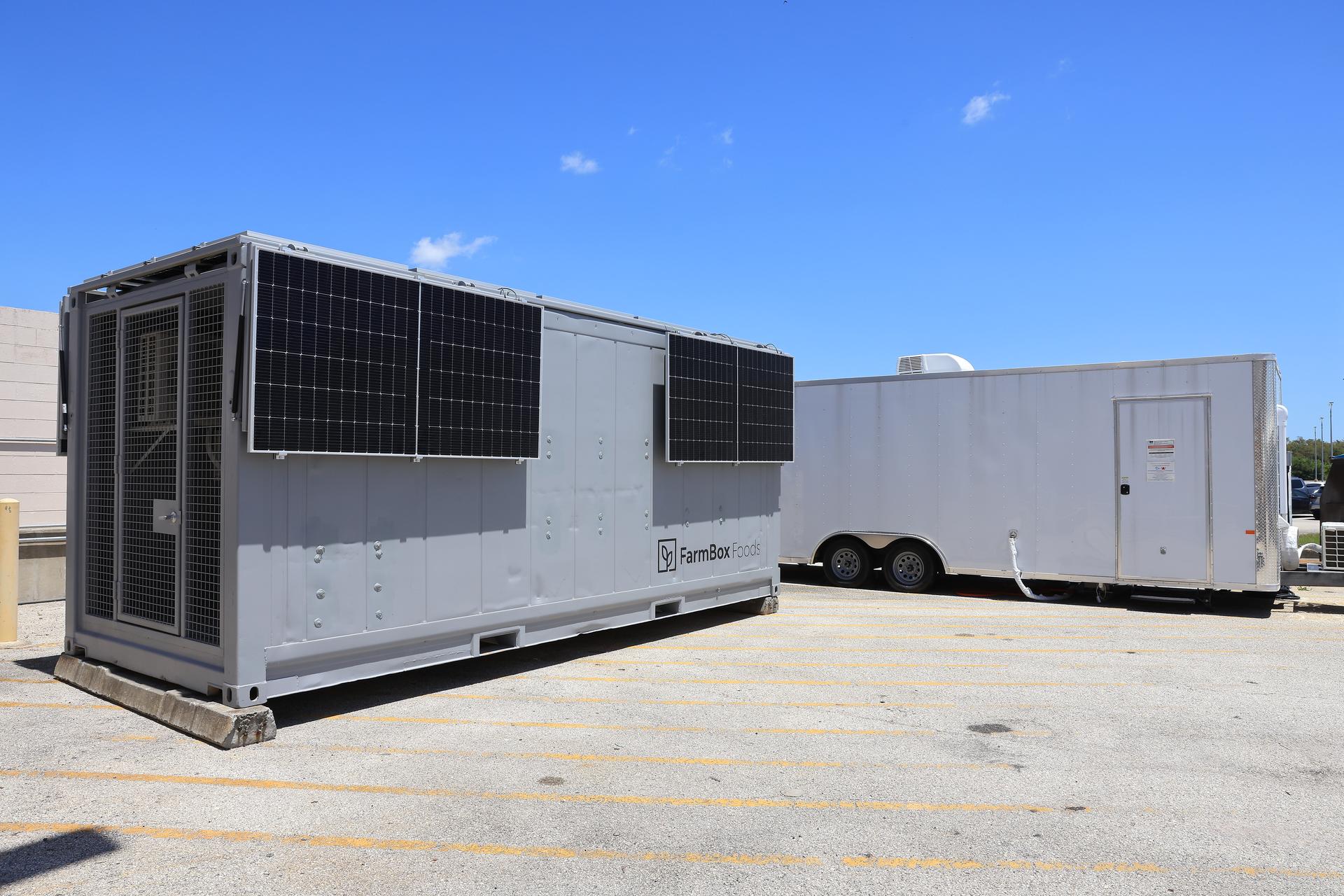

A mobile wastewater treatment system built at NASA’s Kennedy Space Center in Florida that can help prepare for long-duration missions on the Moon and Mars departed the spaceport and arrived at the University of North Dakota in Grand Forks. Graduate students at the university will test the technology under conditions designed to closely mimic the challenges of operating on another planetary surface.
The Divergent Deployable Wastewater Treatment Facility is designed to turn crew wastewater into useful resources, which future explorers will need every day. At the University of North Dakota, teams will integrate this yeni wastewater system with the university’s Integrated Lunar/Martian Analog Habitat. Student operators and NASA researchers will study how the facility performs when connected to a habitat-like environment and exposed to the kinds of operational limits crews could face on another planet.
“NASA’s Artemis program is laying the groundwork for a sustained human presence on the Moon, where habitats will need to operate far from the steady resupply chain that supports astronauts in partial gravity,” said Luke Roberson, surface water systems lead within the Mars Campaign Office at NASA Kennedy. “To solve that challenge, we are developing the future of sustainable lunar surface systems to process wastewater into nutrient feedstocks for plants and biomanufacturing.”
Housed inside an 8.5-by-24-foot trailer, the facility brings together three biological reactor systems, a vertical garden, water-polishing hardware, environmental monitoring, autonomous control software, and safety systems. The trailer was outfitted at NASA Kennedy to function as a deployable laboratory and to travel between at least two simulation test sites as the technology matures.
Unlike wastewater systems on Earth, this facility keeps waste streams separate. That divergent approach is important for small crews, because wastewater from four to eight people can be highly concentrated. Urine, hygiene water, laundry water, fecal waste, and food waste each contain different levels of salts, solids, carbon, nitrogen, phosphorus, and other compounds. Treating them separately allows each stream to be processed by the reactor best suited for the job.
To do that, the system uses three different bioreactors to treat waste streams. The Anaerobic Phototrophic Membrane Bioreactor processes fecal and food waste and converts it into a nutrient-rich wastewater that can support plant growth. The Suspended Aerobic Membrane Bioreactor processes urine and flush water. The Membrane Aerated Biological Reactor treats graywater from hygiene and laundry activities. Collectively, the bioreactors process nutrients to feed the facility’s vertical garden and prepare the water for reuse. Inside that garden, crops will grow hydroponically, or without using soil, by using nutrient solutions derived from the bioreactors. Researchers will compare crop performance with plants grown using standard hydroponic nutrients.
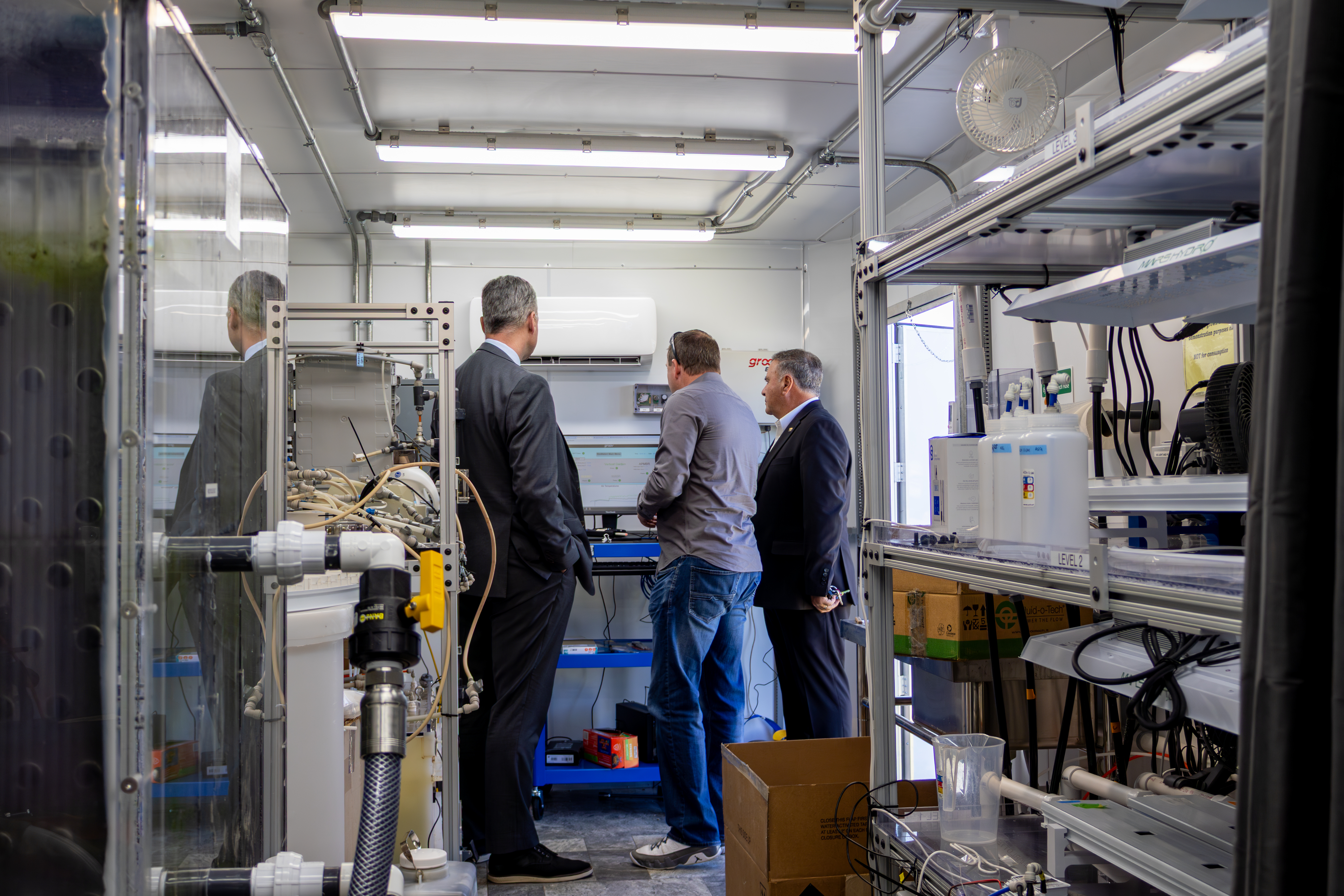
At North Dakota, under a NASA EPSCoR (Established Program to Stimulate Competitive Research) grant, the facility was connected to the Integrated Lunar/Martian Analog Habitat through a bathroom interface that includes a urine-diverting toilet. The setup will allow different waste streams to be separated at the source and sent to the correct treatment systems. In parallel, Ali Alshami’s team is developing novel membrane-based separation technologies intended for future integration into the divergent wastewater facility to improve water recovery efficiency, contaminant rejection, and overall system resilience for long-duration habitation missions.
“The tests will help NASA evaluate real-world operation, crew training needs, system reliability, and how wastewater simulants compare with actual human metabolic waste in an analog mission environment,” said Alshami.
These efforts are focused on advancing compact, energy-efficient treatment approaches capable of handling complex wastewater streams generated in closed-loop extraterrestrial environments.
“The testing campaign at the University of North Dakota supports the facility’s technology maturation from laboratory-scale validation toward demonstration in a relevant Inflatable Lunar/Martian Analog Habitat environment,” said Pablo De Leon, professor and department chair of Space Studies at the University of North Dakota.
Lessons learned could inform future higher-fidelity tests, including potential integration with NASA’s next generation of yearlong simulated Mars missions via isolation analogs at the agency’s Johnson Space Center in Houston.
The work is part of NASA’s broader Bioregenerative Life Support Systems effort, which is developing biological approaches to reduce dependence on Earth-supplied consumables. In future lunar or Martian habitats, systems like the wastewater treatment facility could help close life support loops by recovering water, recycling nutrients, supporting crop production, and reducing the amount of waste that must be stored or discarded. Further NASA research completed trade studies demonstrating how bioregenerative life support becomes more effective for space travel over current life support technologies.
NASA researchers also are exploring how wastewater-recovered resources could support in-space manufacturing. One effort is studying how nutrient-rich water from bioregenerative wastewater systems could feed microbes that produce lactic acid, which can be turned into polylactic acid. The material could one day serve as a binder for 3D printing with lunar or Martian regolith, the loose, fragmental surface material, or could be used for replacement parts, extending the value of recovered waste beyond water and food systems.
“By sending the facility from NASA Kennedy to North Dakota, the agency is moving a key part of that circular economy out of the lab and into a real-world test,” said J.J. Edelmann, surface systems domain lead for the Mars Campaign Office at NASA Headquarters in Washington. “The work may begin with wastewater, but its goal is much larger. We want to help future crews live sustainably on the Moon, learn how to operate farther from Earth, and carry those lessons forward to Mars.”
To learn more about the agency’s lunar and Mars exploration, visit:
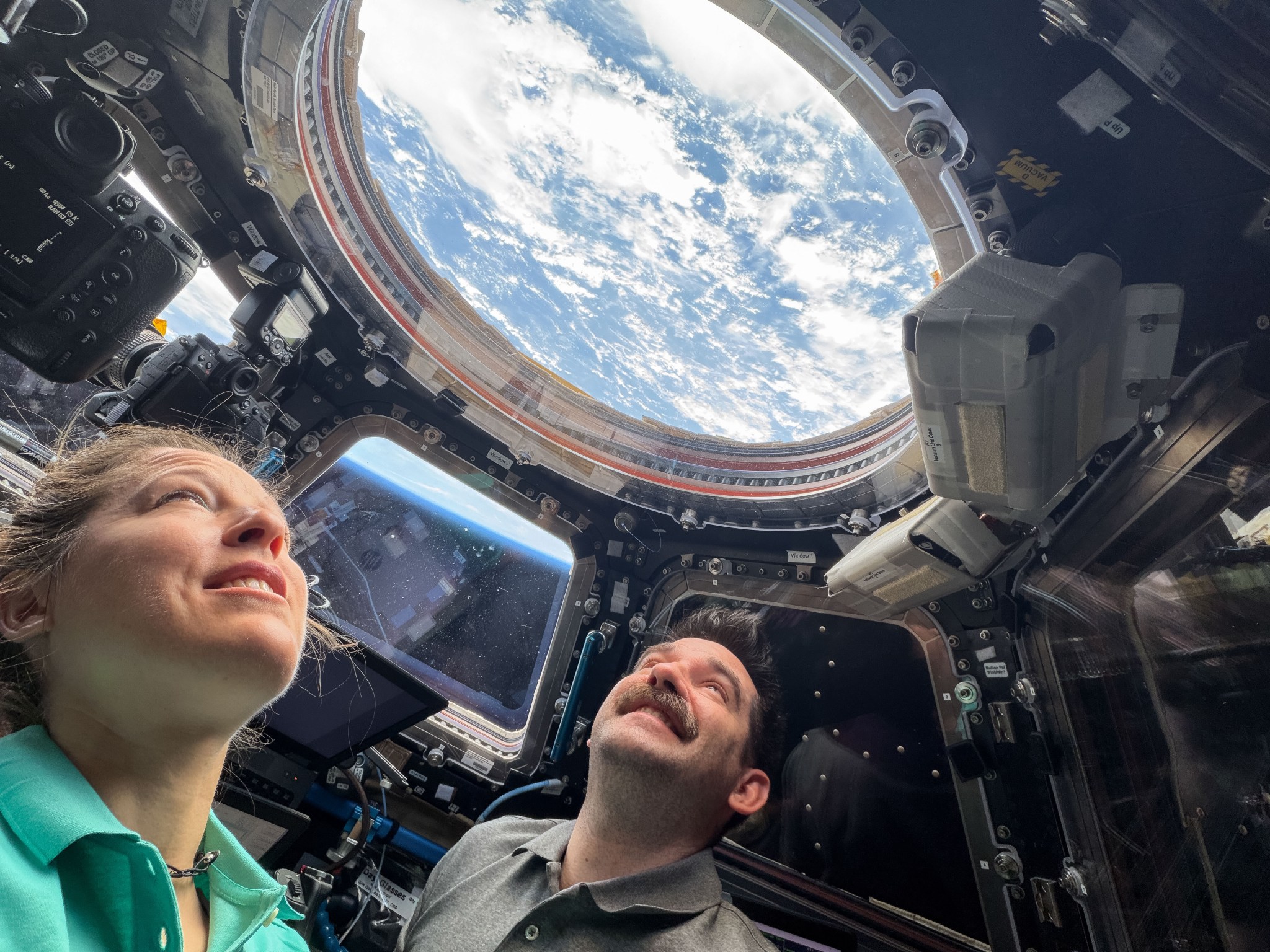
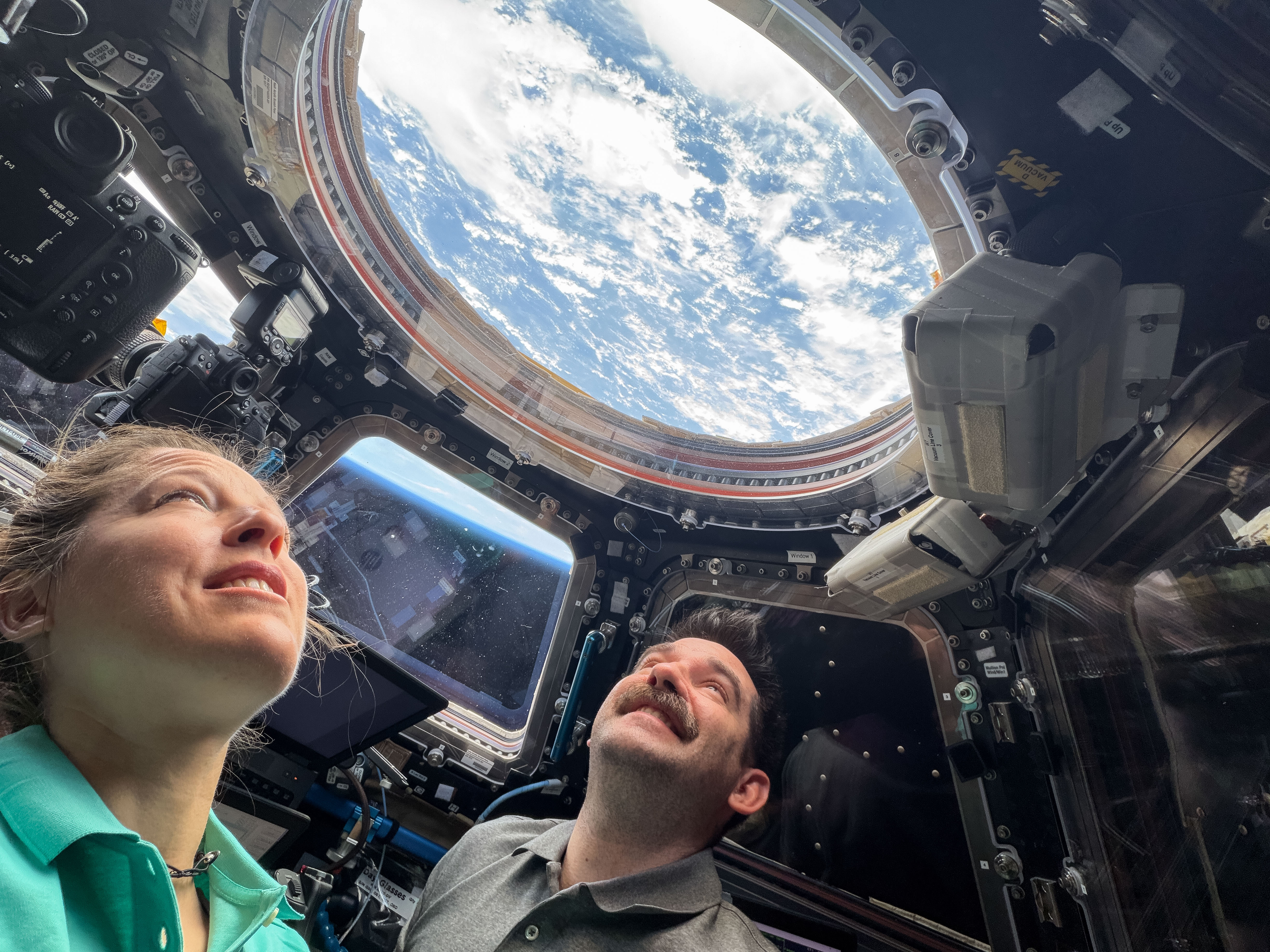
Astronauts Sophie Adenot of ESA (European Space Agency) and Jack Hathaway of NASA, both Expedition 74 flight engineers, look out a window in the cupola, monitoring the automated approach and docking of the SpaceX Dragon cargo spacecraft to the International Space Station on May 17, 2026. The orbital outpost was soaring 259 miles above the Indian Ocean just west of the Maldives at the time of this photograph.
See the cupola and other parts of the space station in our guided tour.
Image credit: ESA/Sophie Adenot
Selçuksports adlı internet sitesinin yöneticisi olduğu iddia edilen Selçuk Yılmaz 2 Haziran’da verdiği ifadesinde kanalla herhangi bir bağlantısı olmadığını söyleyerek suçlamaları reddetti.
Sitenin, Türkiye Süper Lig maçlarını kaçak yayınladığı ve yasa dışı bahis sitelerine yönlendirme yaptığı tespit edilmişti.

Microsoft teknoloji dünyasında işletim sistemlerinin geleceğini şekillendiren yepyeni bir altyapı projesini teknoloji ekosistemine sunuyor. Şirket akıllı cihazlarda geleneksel mobil uygulamaların yerini tamamen yapay zeka ajanlarına bırakan yeni nesil bir donanım ve yazılım platformu olan Project Solara‘yı resmi olarak duyurdu.
Platform, kullanıcıların farklı uygulamalar arasında geçiş yapma zorunluluğunu tamamen ortadan kaldırıyor. Cihazlar doğrudan entegre edilen yapay zeka ajanları üzerinden tüm işlemleri kullanıcı komutlarıyla veya proaktif bir şekilde kendi kendine gerçekleştiriyor.

Bilişim modelinin kalbinde ise donanım devi Qualcomm yer alıyor. İki dev şirketin stratejik ortaklığı kapsamında Project Solara altyapısı doğrudan Qualcomm işlemcilerle desteklenen cihazlarda tam performanslı bir şekilde çalışıyor. Geleneksel uygulama mimarisinin dışına çıkan bu sistem tüm işlem gücünü yapay zeka modellerini yerel cihaz üzerinde çalıştırmak için kullanıyor.
Kullanıcılar artık bir e-posta göndermek takvim planlamak veya karmaşık araştırmalar yapmak için ayrı ayrı uygulamalara ihtiyaç duymuyor. Arka planda çalışan yapay zeka sistemi tüm bu görevleri tek bir merkezden doğal dil işleme yetenekleriyle anlayarak milisaniyeler içinde hızlıca sonuçlandırıyor.
Teknoloji dünyasındaki uygulama mağazası bağımlılığını doğrudan azaltan bu yeni ekosistem donanım üreticilerine yepyeni bir oyun alanı açıyor. Akıllı telefonlar, giyilebilir cihazlar ve ev teknolojileri artık doğrudan yapay zeka asistanlarıyla entegre bir şekilde pazara sunuluyor. Microsoft ve Qualcomm ortaklığı ile şekillenen platformun ilk fiziksel cihazlarda ne zaman yer alacağına veya geliştiriciler için ne tür bir gelir modeli sunacağına dair net bir bilginin de henüz paylaşılmadığını belirtelim.
This article is from Making AI Work, MIT Technology Review’s limited-run yenisletter examining how to apply LLMs across industries. To receive it in your inbox,sign up here.
From accounting to design to market research and product development, there’s a staggering breadth of skills needed to run a business. A large company can hire experts to handle these tasks, but small businesses don’t always have this luxury.
That’s where AI comes in. Today’s AI models do a decent job at these tasks. The trick for small businesses is to understand where AI is good enough and where it’s not.
One place where a “good enough” AI can already be quite valuable to small business owners is in providing secretarial skills and handling basic administrative matters. Let’s take a look at how one private tutor is using it to improve his recordkeeping and free up his time.
Sam Finnegan-Dehn works in fundraising for a charity, but he moonlights as a math and philosophy tutor for university students from his home in London. Through this part-time business, he can leverage his degrees in philosophy and share his love of the subject with clients.
But meeting with students is only a fraction of the work it takes to be a good tutor. He also plans lessons and finds fresh reading materials, creates assignments, sends invoices, and keeps up with yeni research—all on top of his regular job. Given these demands, Finnegan-Dehn doesn’t have as much time as he’d like to grow his tutoring roster.
So he’s turned to AI for some help in managing the day-to-day aspects of his business. He says AI has taken on a secretarial role across all of his digital notebooks, where he jots down reminders about his clients’ progress and yeni readings to keep himself up-to-date. He describes using AI as kind of like having a second memory that helps him connect ideas he’s written down in various places.
While he has experimented with different tools like Claude and ChatGPT, he’s now landed on Notion AI because it integrates better with his tutoring notes, which live across his notebook tabs in the Notion app. Finnegan-Dehn doesn’t use AI to create teaching materials, but he does let Notion AI record meetings with his clients (after getting their consent), and then uses its automated summaries to refine his teaching strategy. For example, if he notices from the AI’s summary that it seems like a certain technique was not helping a student, he may change how he approaches the subject next time.
Beyond this, Notion AI also helps him with goal-setting, drafting lesson notes, invoicing, and generating and syncing social media posts. For goal-setting, for example, Finnegan-Dehn says he understands his long-term goals for his business but not always the concrete steps to build to them. He uses AI to help fill in these gaps. He starts by writing down a “North Star” goal—say, to have a certain number of clients by the end of the year. Next, he asks his AI to generate the steps that he needs to take to get there, given the profile he has built up in the app. Then, he can reflect on the results and choose which tasks to tackle first.
Notion has been a big player in note-taking software for many years. Its AI add-on, released in late 2023, now has tools that enable it to interact with many other online productivity platforms. There’s an email client, calendar integrations, and a yenily released agent. And while this level of access has raised privacy concerns, it can also make for a pretty powerful virtual assistant.
Many of the tasks targeted by Notion AI are less creative and more rote: syncing information across documents or searching through old scribbles, for example. This makes the tool especially appealing to small business owners, who have limited bandwidth, particularly for menial work.
Other companies are developing tools targeted at specific industries. For example, Grandma’s Quilt Shop in Yuma, Arizona, uses Rain, which has a software suite tailored to craft companies, to generate inventory descriptions and pricing for its stock of fabric designs. The owners claim this AI tool cuts the time it takes to list items by 60 to 80%.
There are drawbacks, though, as Finnegan-Dehn described some of Notion AI’s idiosyncrasies as “clunky” at times. And the AI add-on for Notion costs $20 per month. As with all yeni tools, small business owners should carefully assess how the potential gains and headaches measure up against the cost of just doing the job themselves.
Consider these points when thinking about whether AI might be able to help you run a business, or make any part of your work life just a little bit easier.
Sign up for Making AI Work, MIT Technology Review’s limited-run yenisletter examining how to apply LLMs across healthcare, climate tech, education, and more.

 We used Google AI Studio to vibe code a quiz about our top I/O 2026 announcements.